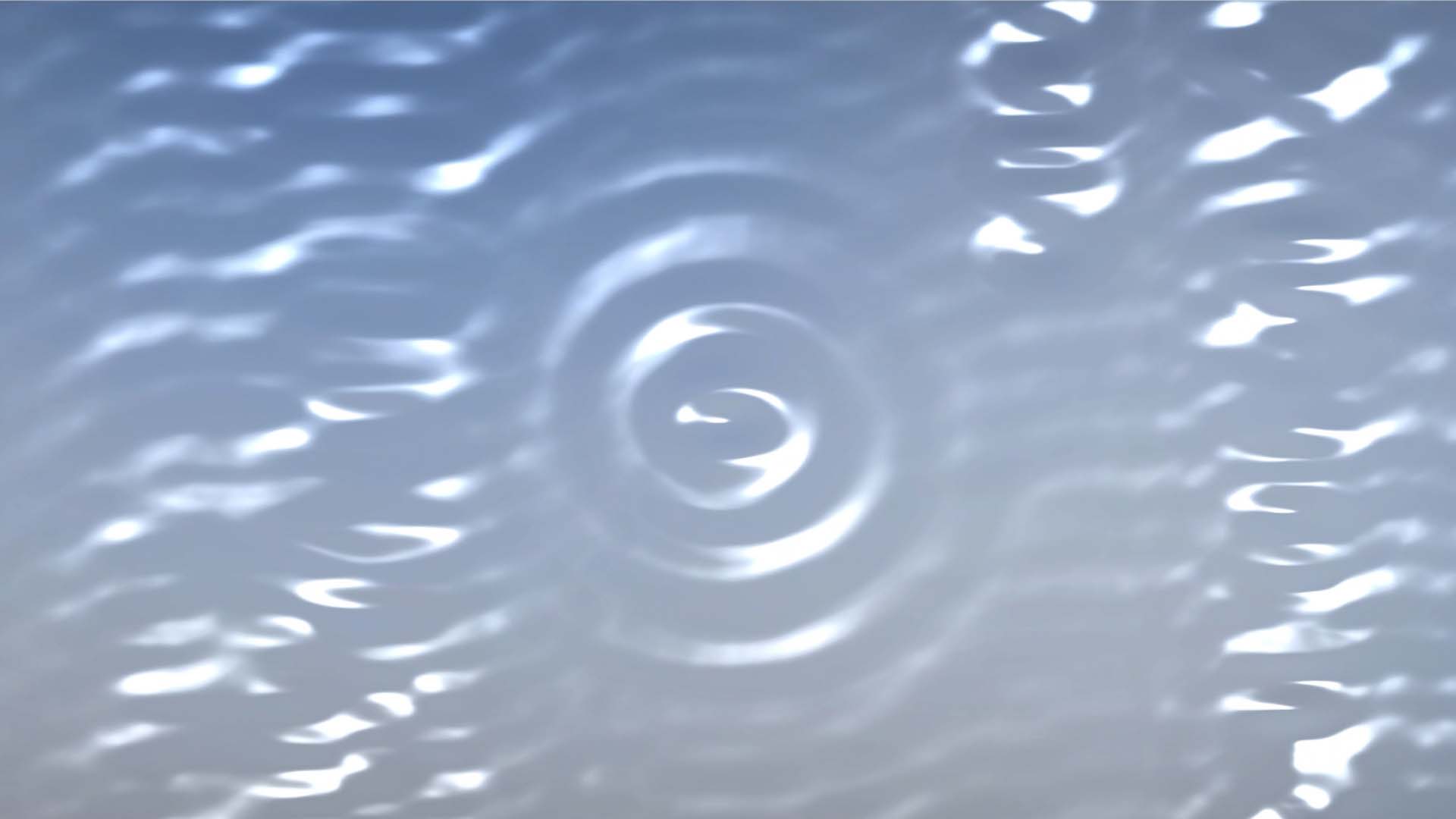
Prototype water visualization program for use in in-car AV experience: uses openGL water ripple shaders manipulated in a Three.JS simulation to convey oncoming traffic and obstacles through a softly fascinating sensation. Original program can be found at: hmg-watersim.web.app.

Flow Fascination: Autonomous Interface
Concept in-car autonomous vehicle (AV) experience utilizing biophilic principles to decrease stress and increase comfort with AV’s. It primarily targets the phenomenon of soft fascination, in which connection with nature can hold one’s attention while reducing the cognitive load (Basu et al., 2019; Kaplan, 1995) and utilizes the visual effect of light shimmering on water, to create an alternative way of observing the environmental sensing capability of the AV. An initial prototype program was developed and deployed to a live website: hmg-watersim.web.app, and a user storyboard was created to communicate the interior experience. The next steps are to expand the functionality of the visual generation program, and to expand the features of the overall in-car encounter.
Project Outcomes:
Automotive interface design
UX research
User Testing
Biophilic design
UX research
User Testing
Biophilic design
This ongoing research is part of the RISD Hyundai Regeneration Studio, funded by Hyundai Motor Group, which explores research in biomimicry for mobility solutions.
Original water generation program can be found at: hmg-watersim.web.app

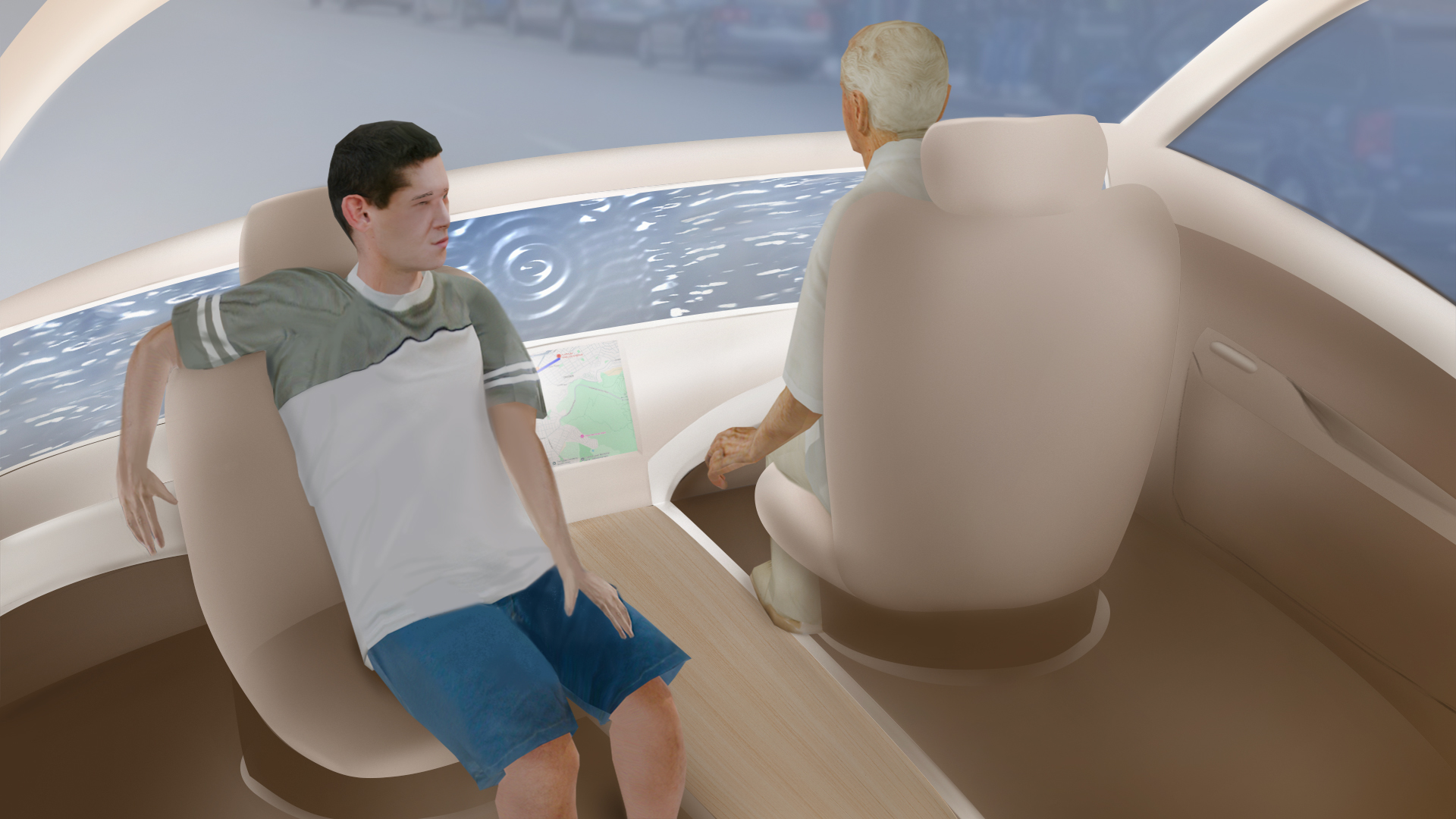
Photoshop rendering of interior layout concept
Problem
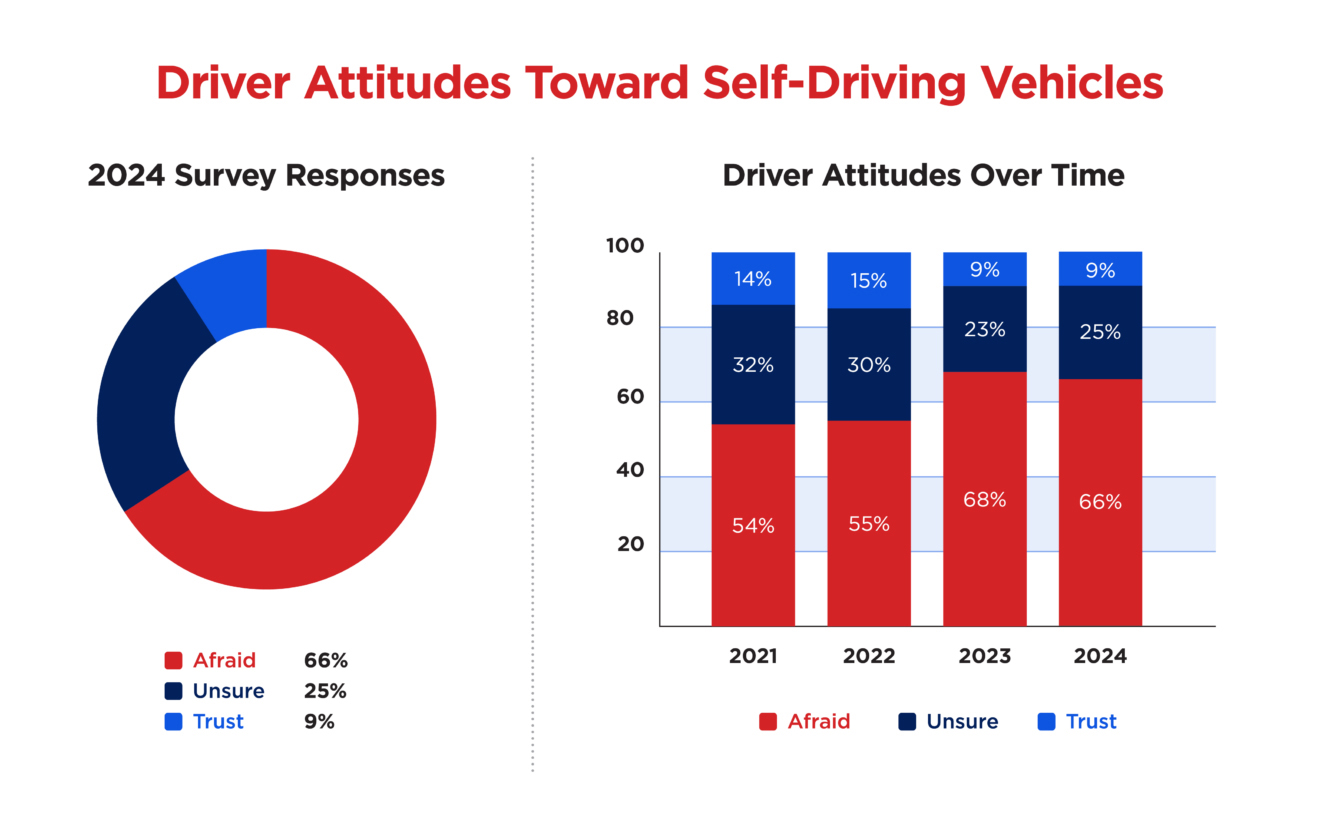
Autonomous vehicles have the potential to increase the accessibility and safety of transportation, yet the majority of people are resistant to the technology, causing stress and anxiety during the ride experience and preventing mass acceptance.

AAA US survey on trust in AV's
Making the Unfamiliar More Natural
Fear of the unknown
“AVs being perceived as risky, unsafe, or dangerous, and causing crashes due to unwanted vehicle actions, unpredictable and incompetent vehicle behavior”(Nordhoff)
Unpredictable
“Erratic, unhuman, and unexpected vehicle behavior, such as AV stopping suddenly” (Nordhoff)
Incompetent
“AVs being considered incompetent and incapable to navigate complexity of urban environments, assessing and responding to objects and events accurately” (Nordhoff)
Primary Interviews
To supplement existing quantitative secondary research with qualitative personal context and explanation, 6 independent primary interviews with participants aged 21-80 with varying exposure to AV's were conducted.
Participants
6 randomly selected people aged 21-80 of varying comfort to AV's
Methods
6 1-on-1 semi-structured interviews
Results
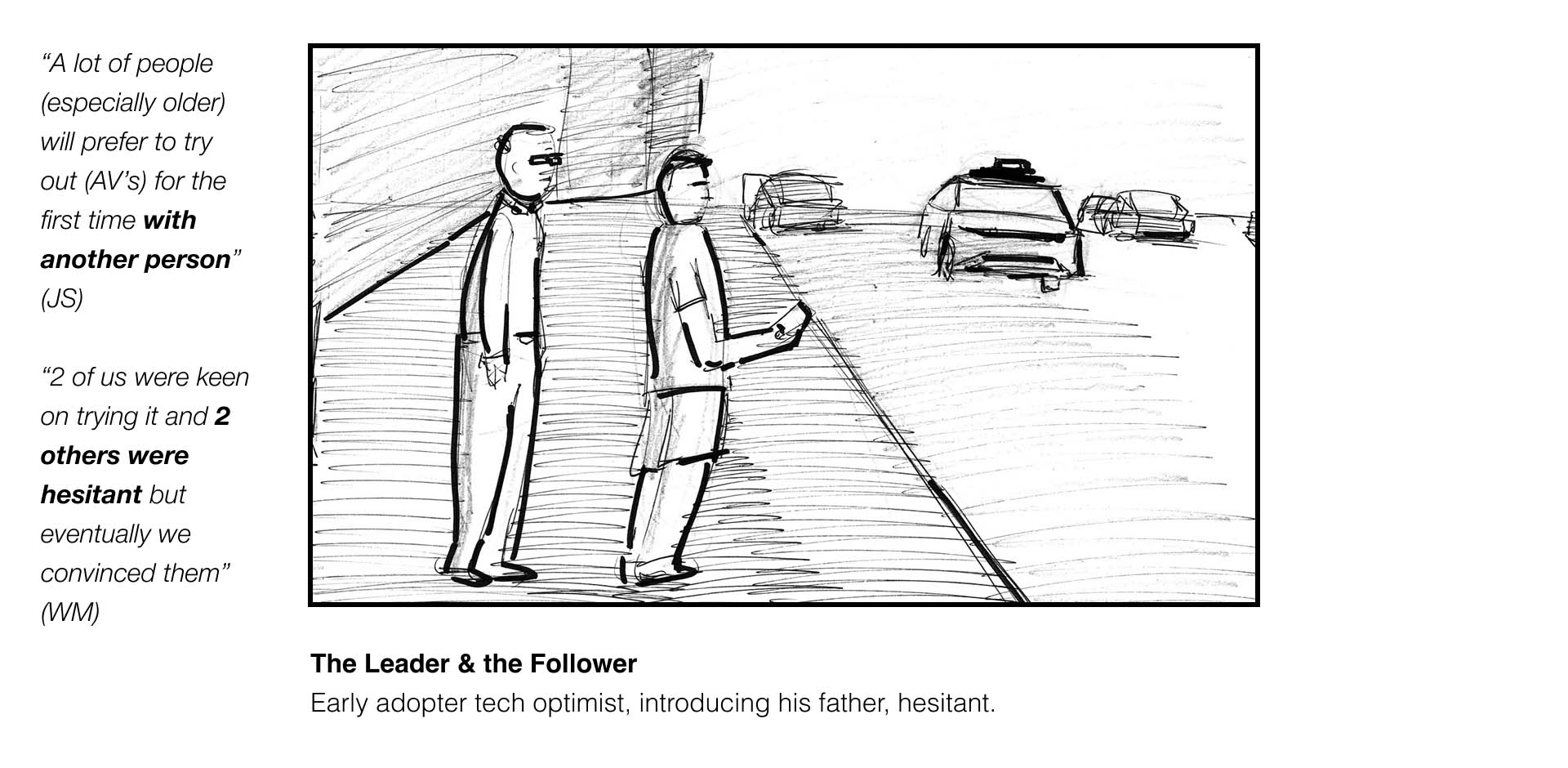
The interviews supported the secondary research findings of "fear of the unknown" due to the unfamiliarity of the technology. Participants also identified curiosity and interest in the technology, with multiple participants describing the influence of a second, more comfortable rider introducing the technology to another first-time passenger.
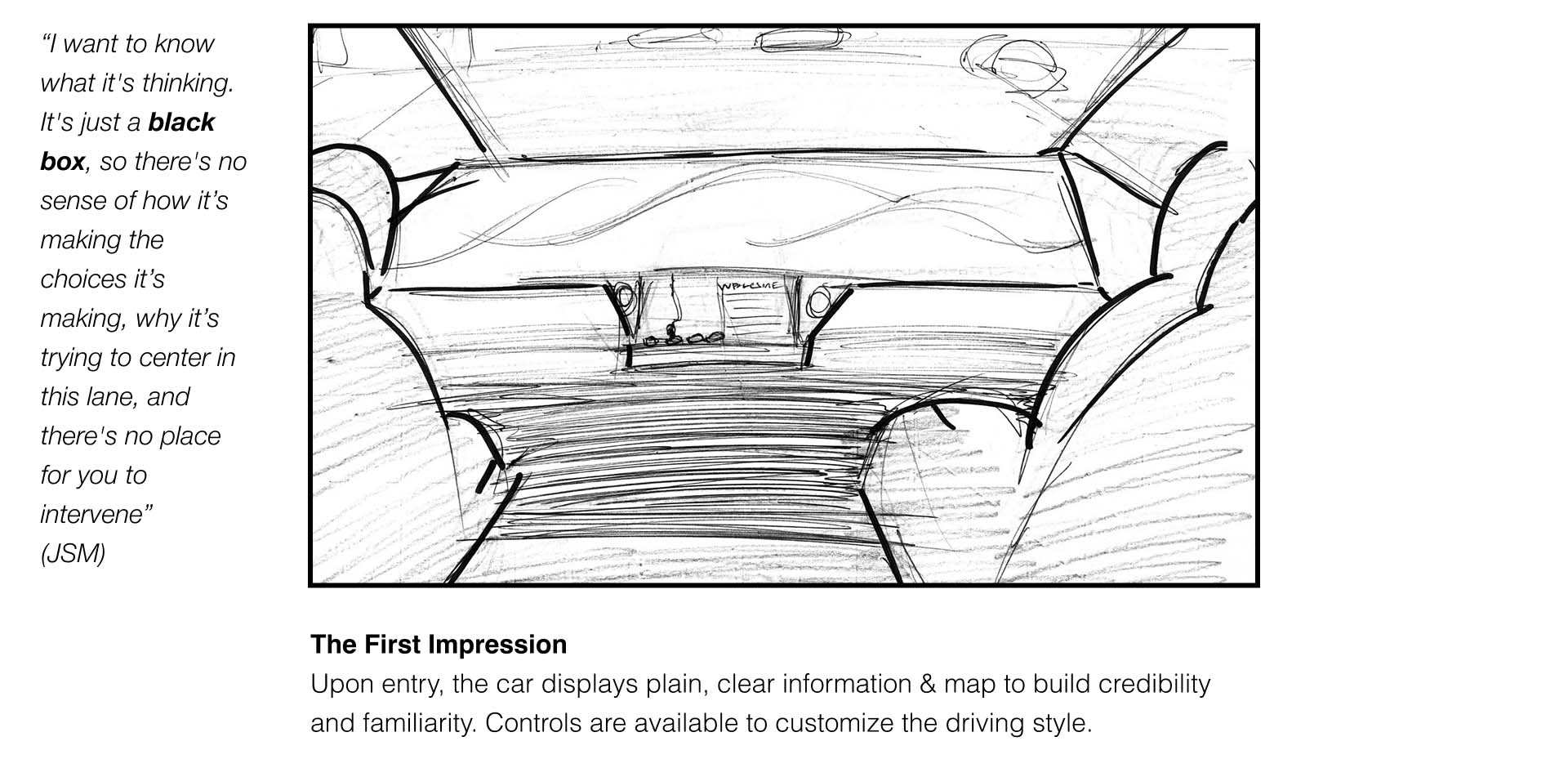
“I want to know what it's thinking. It's just a black box, so there's no sense of how it’s making the choices it’s making, why it’s trying to center in this lane, and there's no place for you to intervene” (JSM)
“A lot of people (especially older) will prefer to try out (AV’s) for the first time with another person” (JS)
Application of Biophilia
Biophilia, the innate affinity of human beings to the natural world, can be a tool to reduce stress, anxiety and to improve mental well-being. How might it be used to increase one’s affinity with autonomous vehicle technology?
"The enjoyment of scenery employs the mind without fatigue and yet exercises it, tranquilizes it and yet enlivens it; and thus, through the influence of the mind over the body, gives the effect of refreshing rest and reinvigoration to the whole system.""
Frederick Law Omsted, 1986
Biophilic Effects of Water

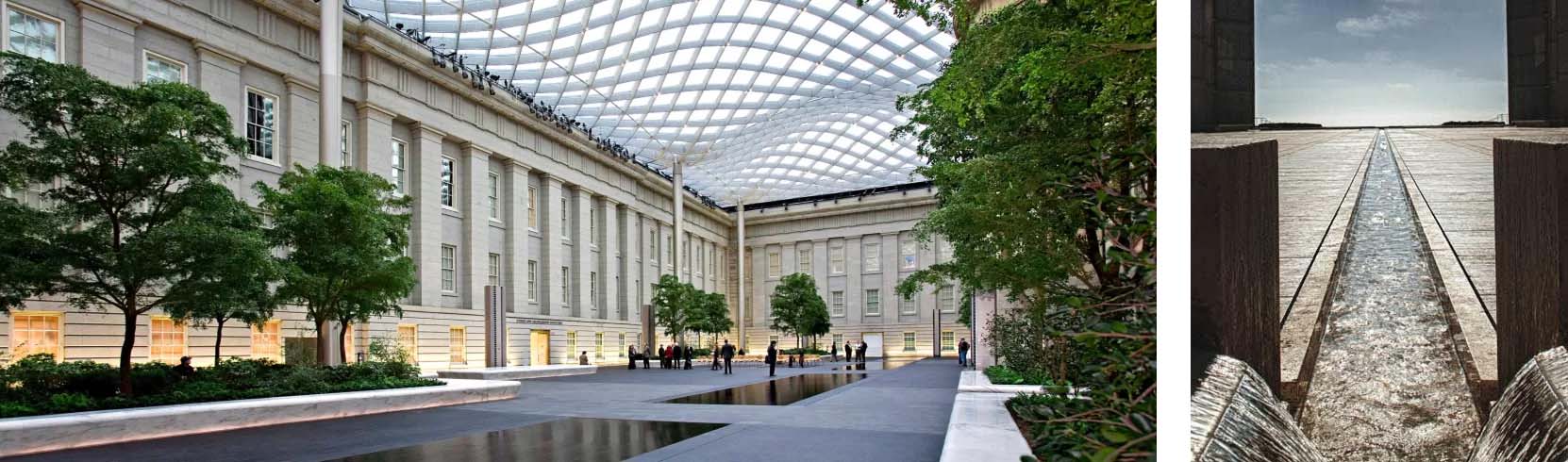
Left: Kogod Courtyard, Smithsonian American Art Museum, Washington, D.C. (source: washington.org), right: River of Life, Salk Institute, California (source: inside.salk)
“Perceived or potential tactile access to water reportedly reduces stress” (Alvarsson et al., 2010; Pheasant et al., 2010).
“Repeated experiences of water do not significantly diminish our level of interest over time” (Biederman & Vessel, 2006)
“Lower heart rate and blood pressure from exposure to water features” (Alvarsson et al., 2010; Pheasant, Fisher, Watts et al., 2010; Biederman & Vessel, 2006)
The Shimmer of Light on Water
Shimmer of car headlights on windows at night
Shimmer of light on water at night
Biophilic Patterns
Non-Rythmic Sensory Stimuli
“Stochastic and ephemeral connections with nature that may be analyzed statistically but may not be predicted precisely” (Browning et al. , 2020)
Prospect
“An unimpeded view over a distance for surveillance and planning” (Browning et al., 2020)
Awe
“Stimuli that defy an existing frame of reference and lead to a change in perception” (Browning et al., 2025)
Soft Fascination
“These readily hold the attention, but in an undramatic fashion. Attending to these patterns is effortless, and they leave ample opportunity for thinking about other things” (Kaplan, 1995)
Soft Fascination
“Nature’s ability to moderately hold one’s attention while leaving sufficient headspace for reflection (permitting) the 'essential mental housekeeping' necessary to address lingering, unresolved thoughts that could otherwise be a drain on attentional resources” (Basu et al., 2019)
Visual Iterations

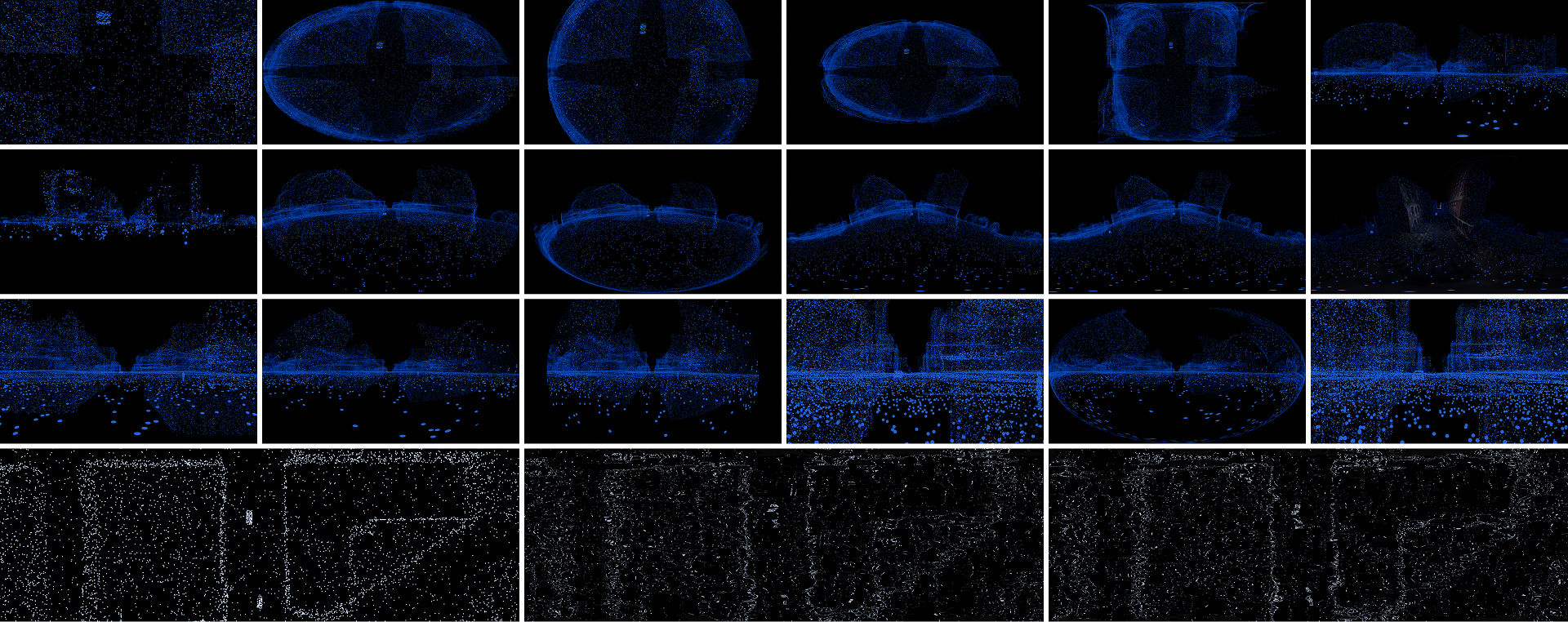
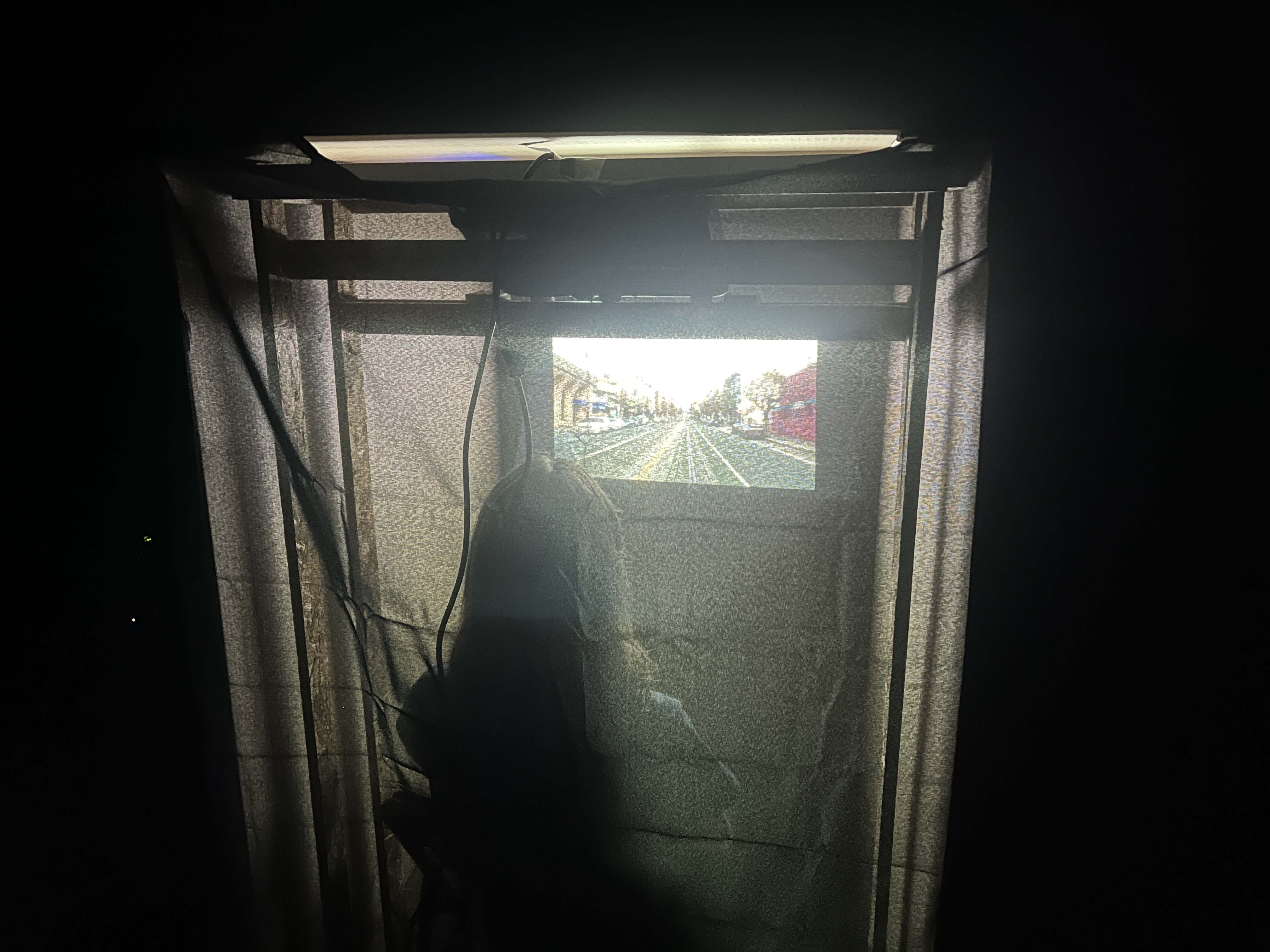
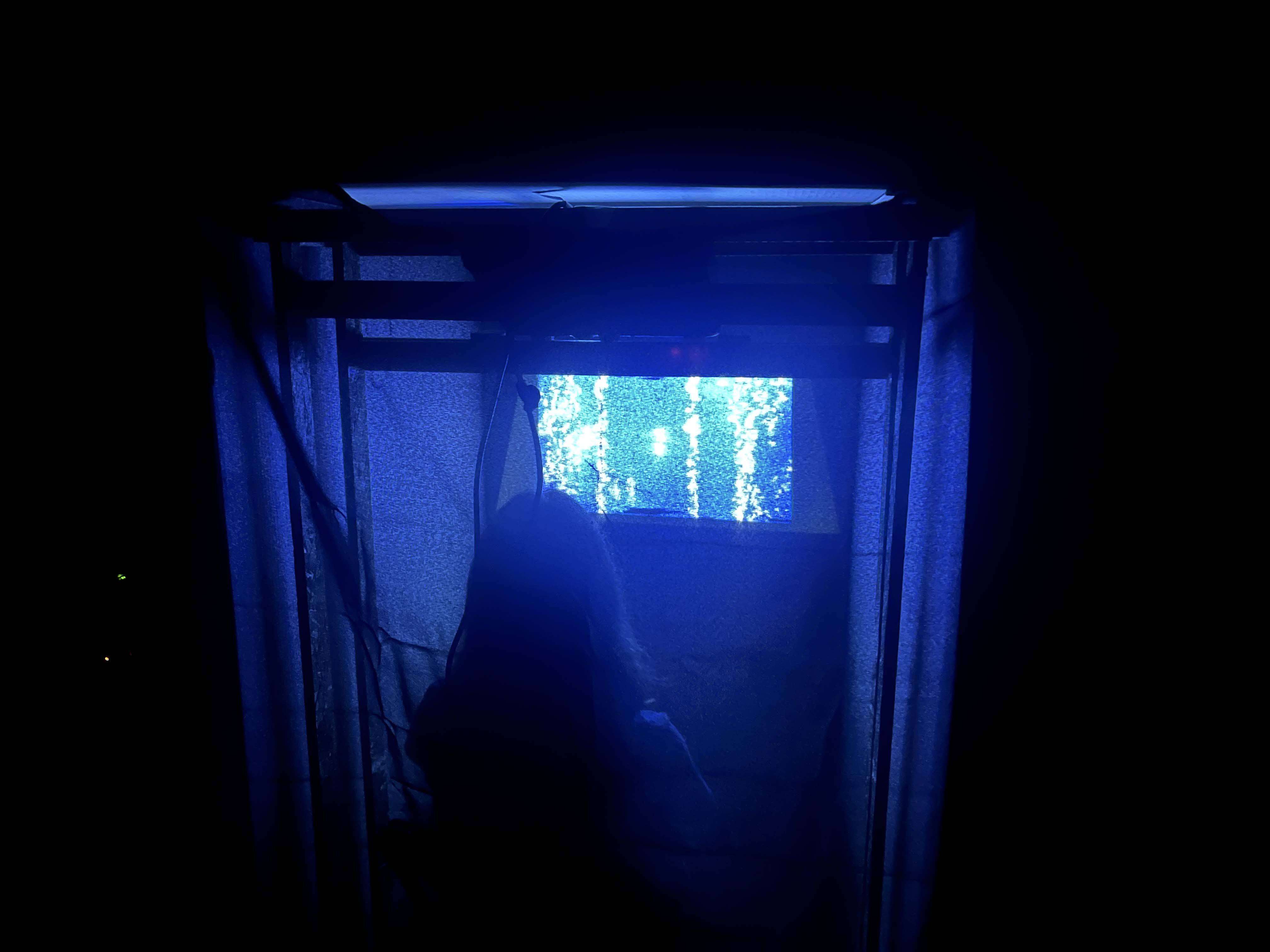
Iterations made using point cloud geometry of a vehicle driving through a model city environment, rendered in Blender

First clip of test: first-person perspective drive

Second clip of test: iteration 1 visual

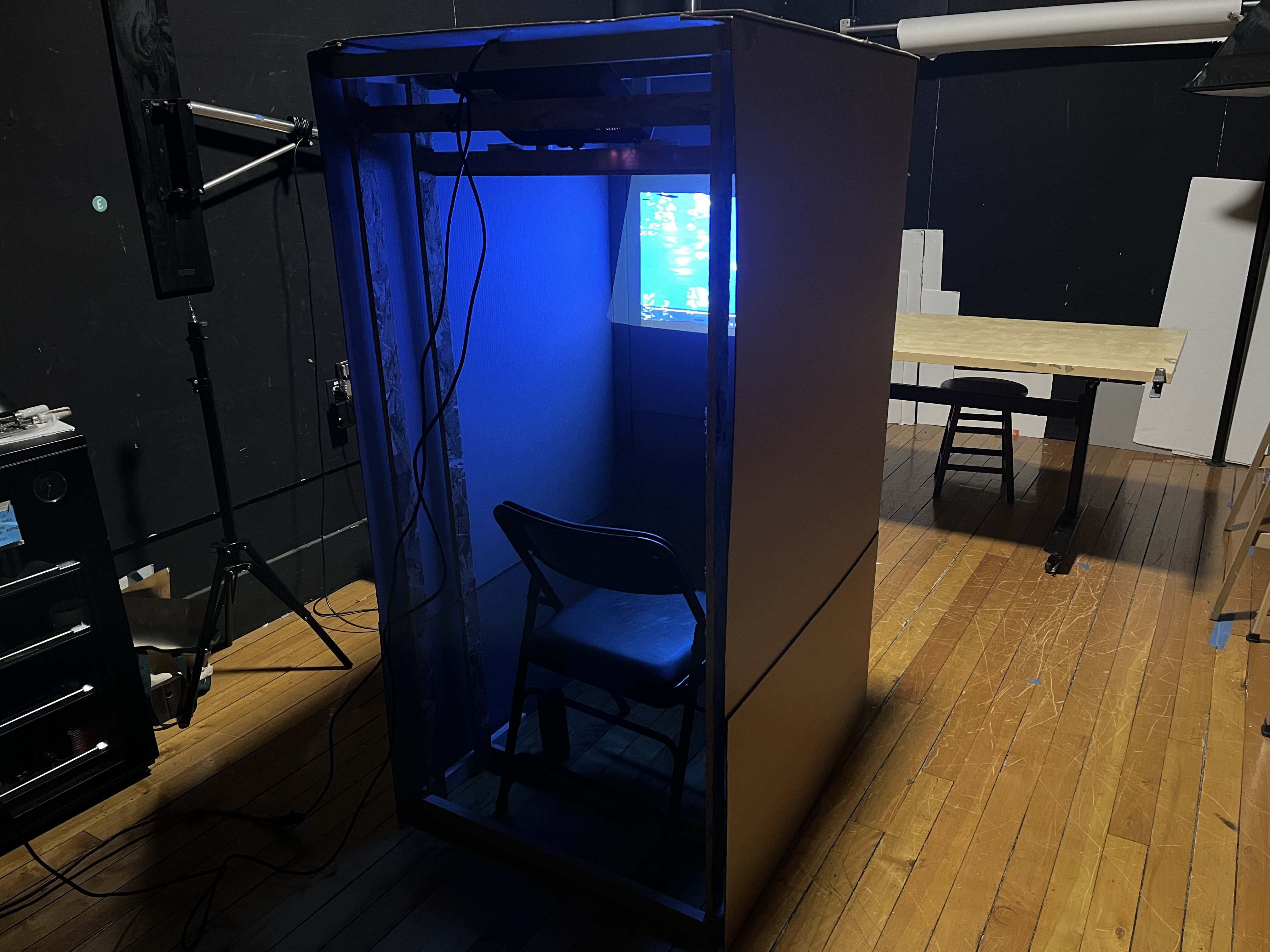
Immersive environment test setup
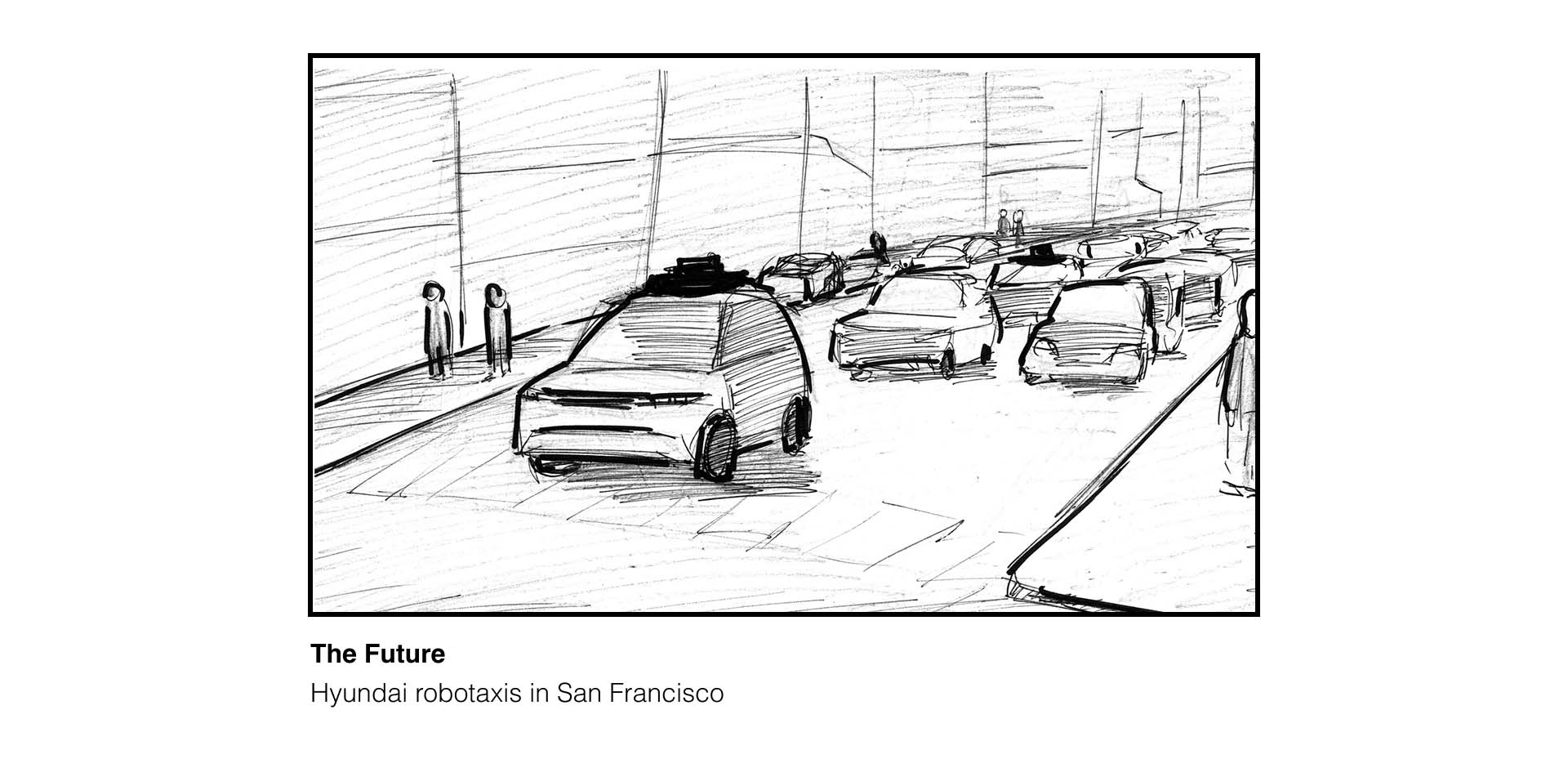
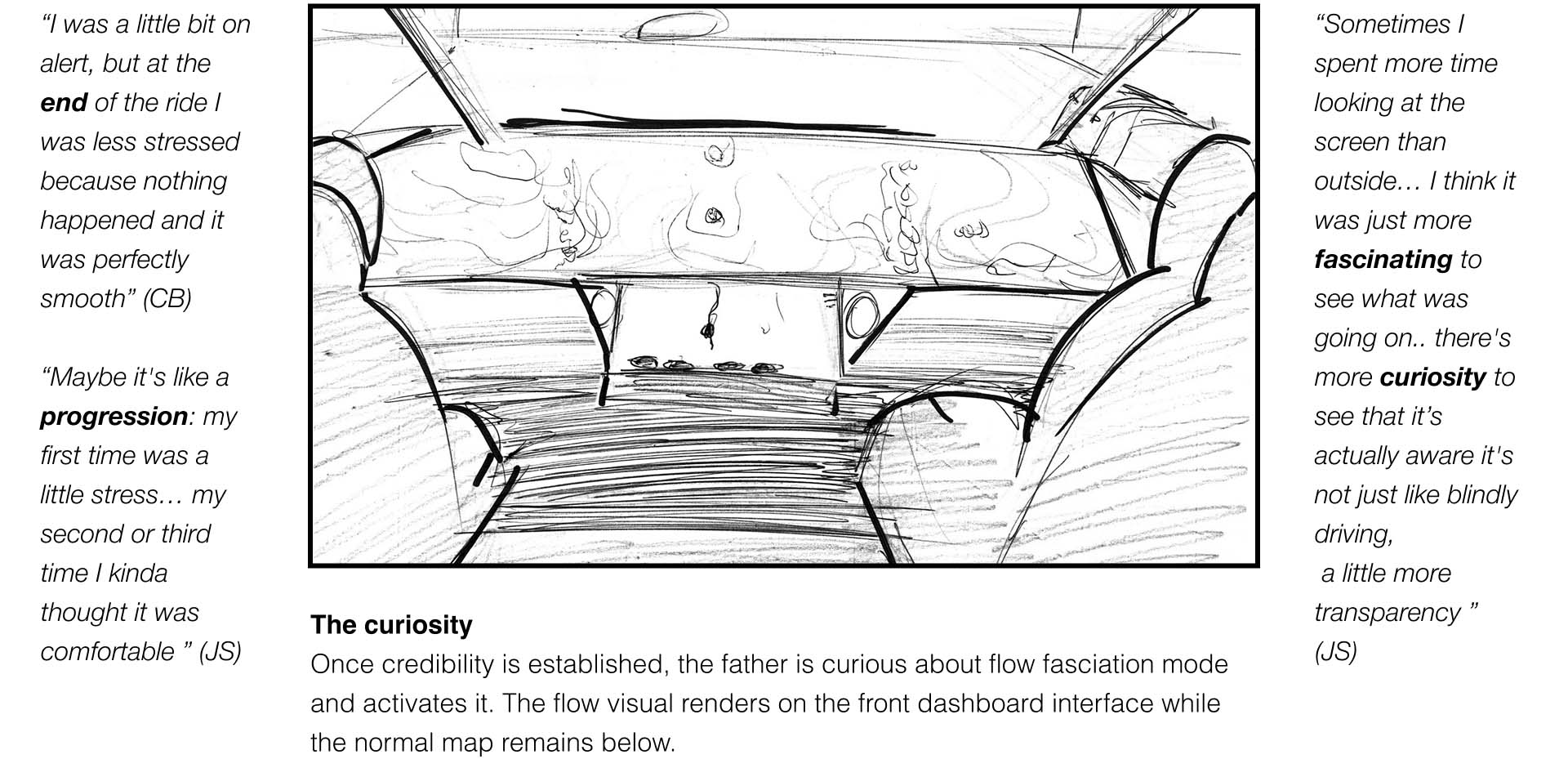
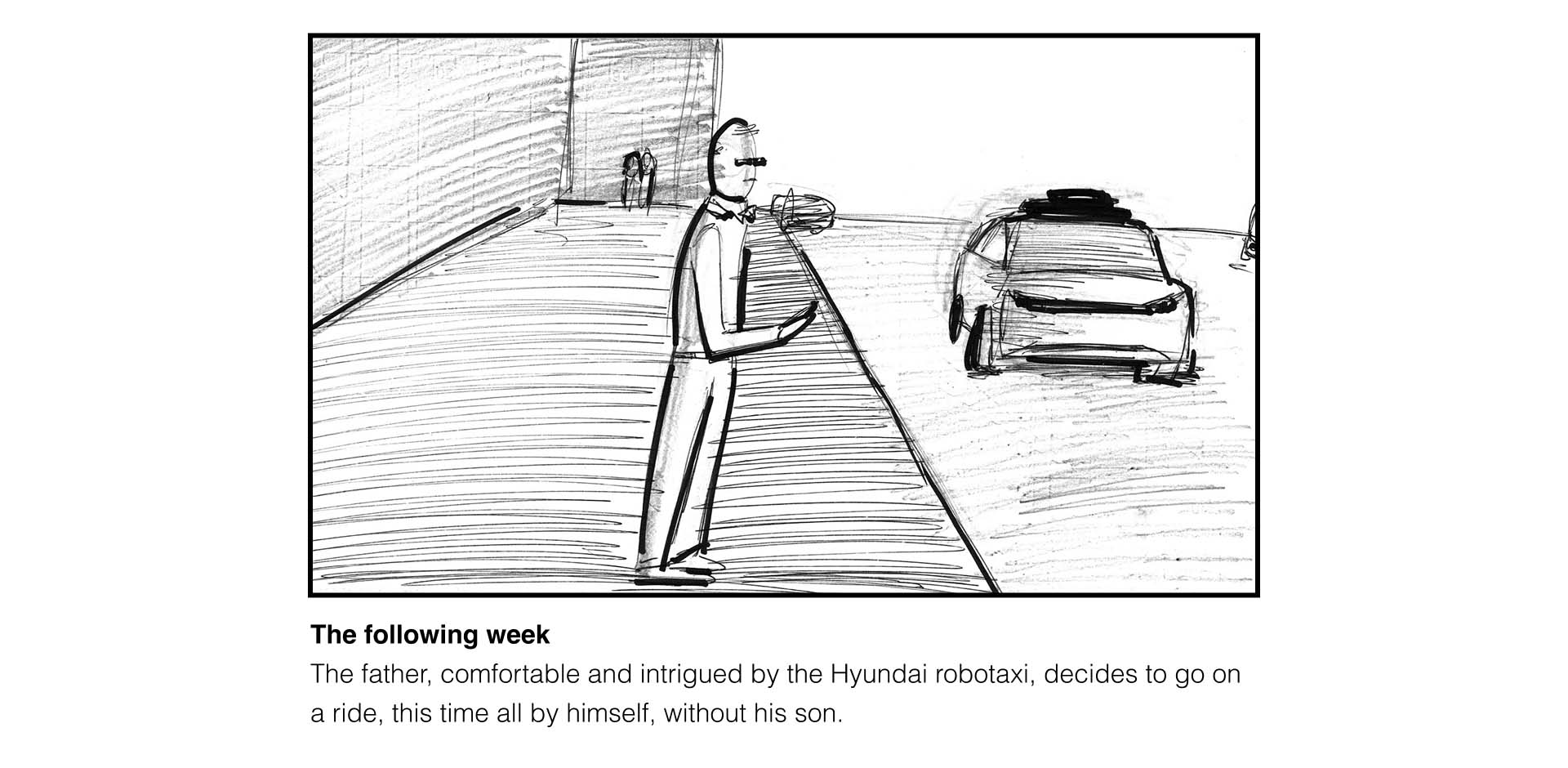
Concept Storyboard: The Taxi Ride
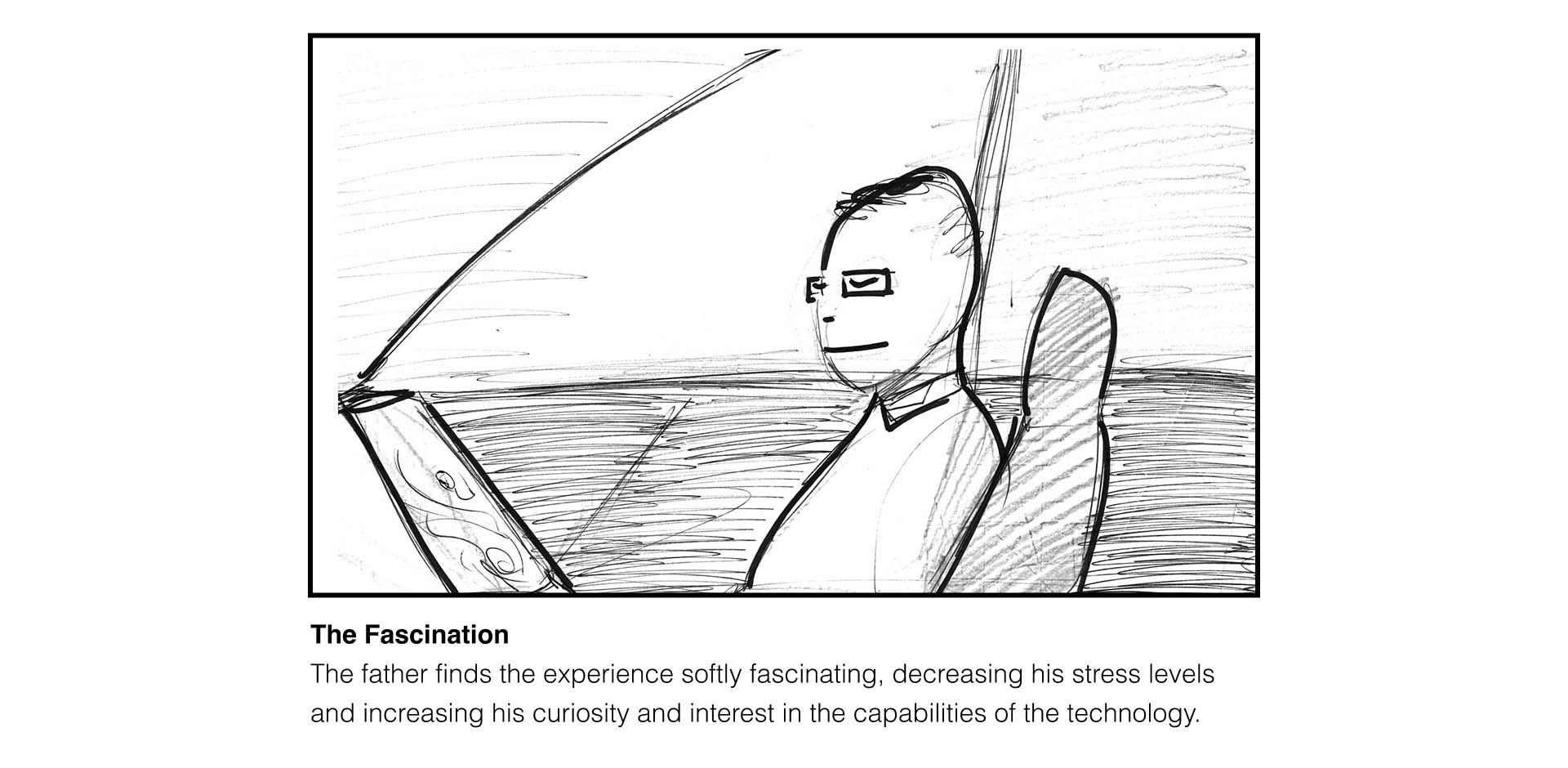
Incorporating the findings from the iteration 1 testing and the initial interviews, the Flow Fascination experience was communicated through a visual storyboard of a target experience of an early-adopter son introducing a hesitant father to ride-share AV technology, changing him from skeptical and anxious to curious, to familiar with the technology to be able to use on his own.


Prototype visual that the passengers would see on the top dashboard of the car. Uses openGL water ripple shaders manipulated in a Three.JS simulation to convey oncoming traffic and obstacles through a softly fascinating sensation. Original program can be found at hmg-watersim.web.app.


Next Steps
The visual content and ride experience are planned to be developed further next Semester in the Spring Hyundai RISD Regeneration Studio. Both programmatic and conceptual means will be utilized to prototype and communicate the ride experience as the reactive nature of the visual is critical to the concept. Specific in-car interactions and scenarios are planned to be prototyped to create a more robust proposal. The testing setup and methods will be refined to achieve more determinate quantitative indicators of stress levels.