Still from animated short film "The Championship"

IOOS : NJ Transit Bus Interface
Intelligent bus information & communication system to assist the bus operator with onboard information and management of crowds, essential yet often neglected aspects of employee performance of the NJ Transit bus system. A novel research method was developed using a Three.JS web simulation to create a virtual onboard bus ride experience, enabling scalable, remote 3D user testing, and an article detailing the findings from this research method was published on Medium.
Project Outcomes:
Physical interface design
UX research
Remote UX testing (3D simulation)
UX research
Remote UX testing (3D simulation)
Animated short film: "The Championship" - In July 2026, New Jersey will host the FIFA World Cup Final for the first time in history. Thousands of fans from around the world will depend on New Jersey’s public transit system to attend the event. How will the match turn out?

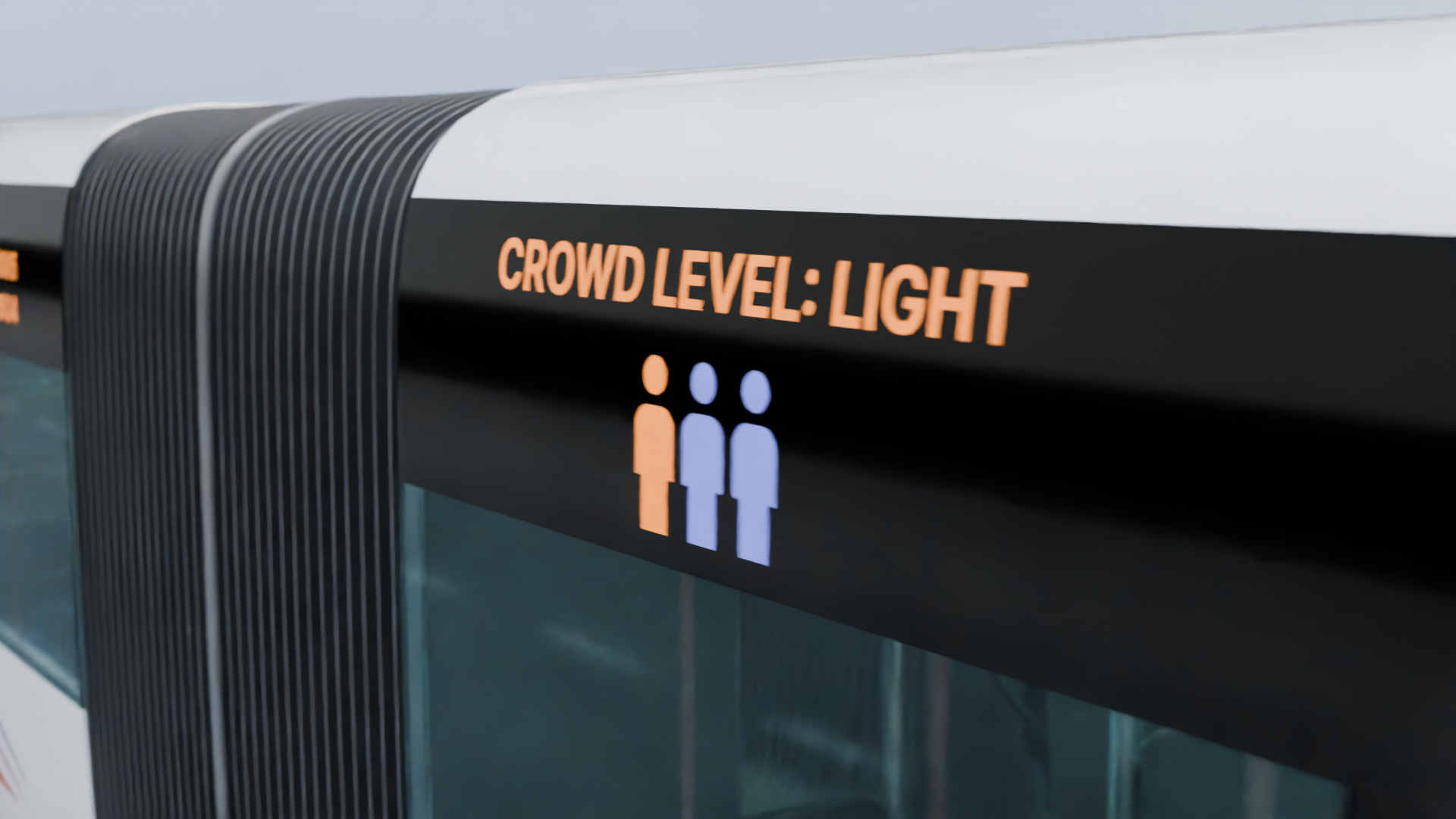
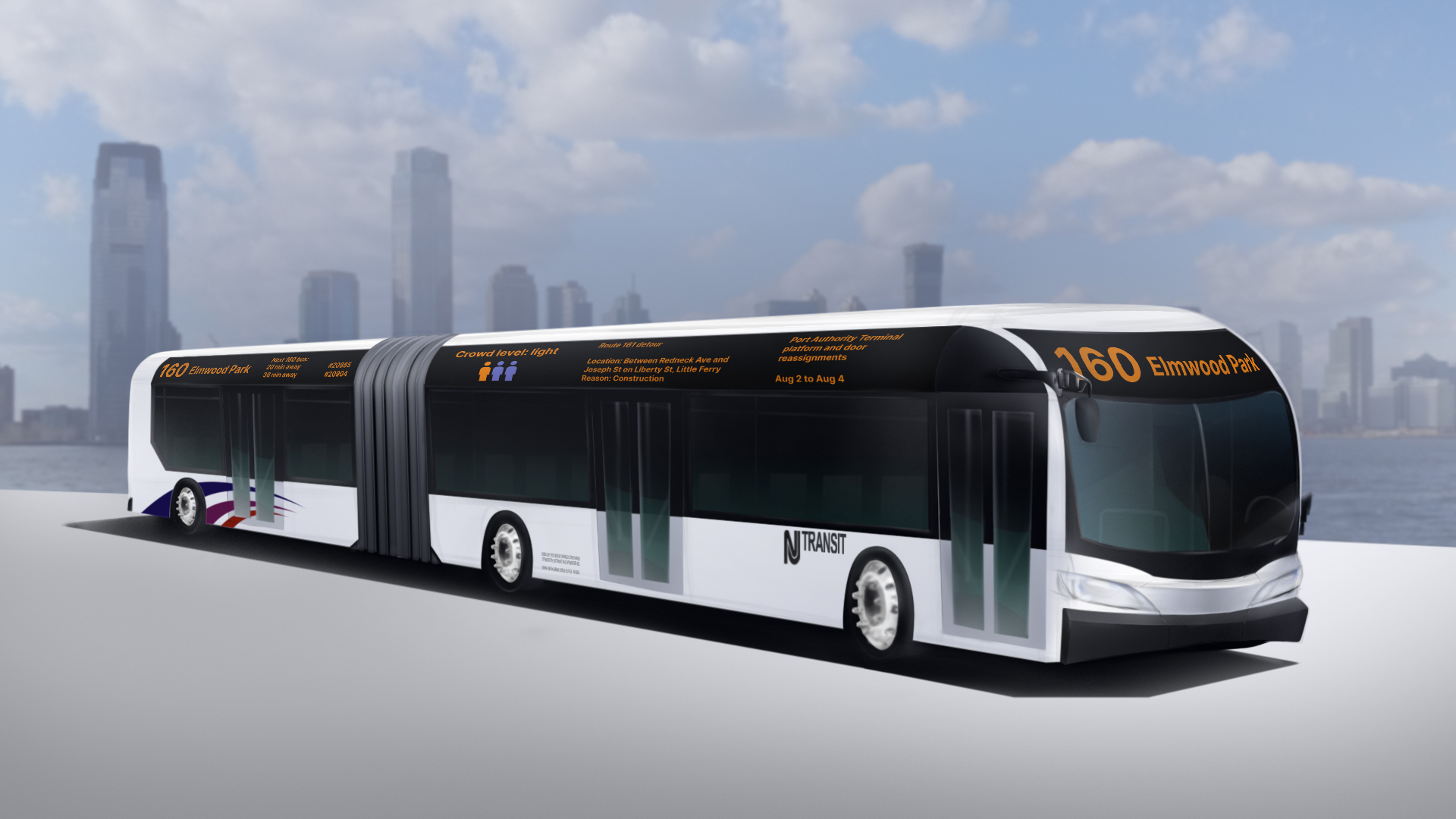
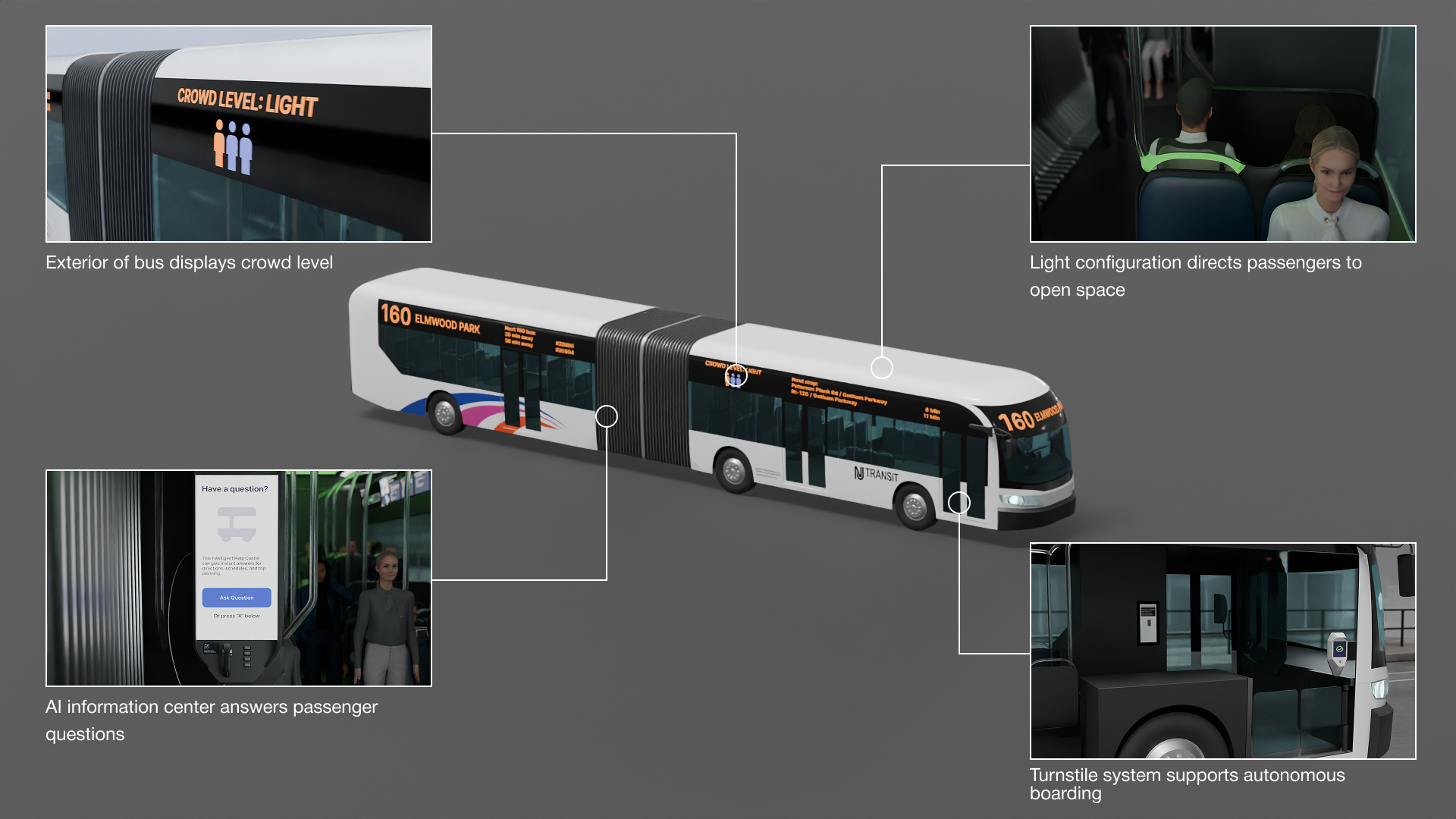
Exterior of bus displays crowd level

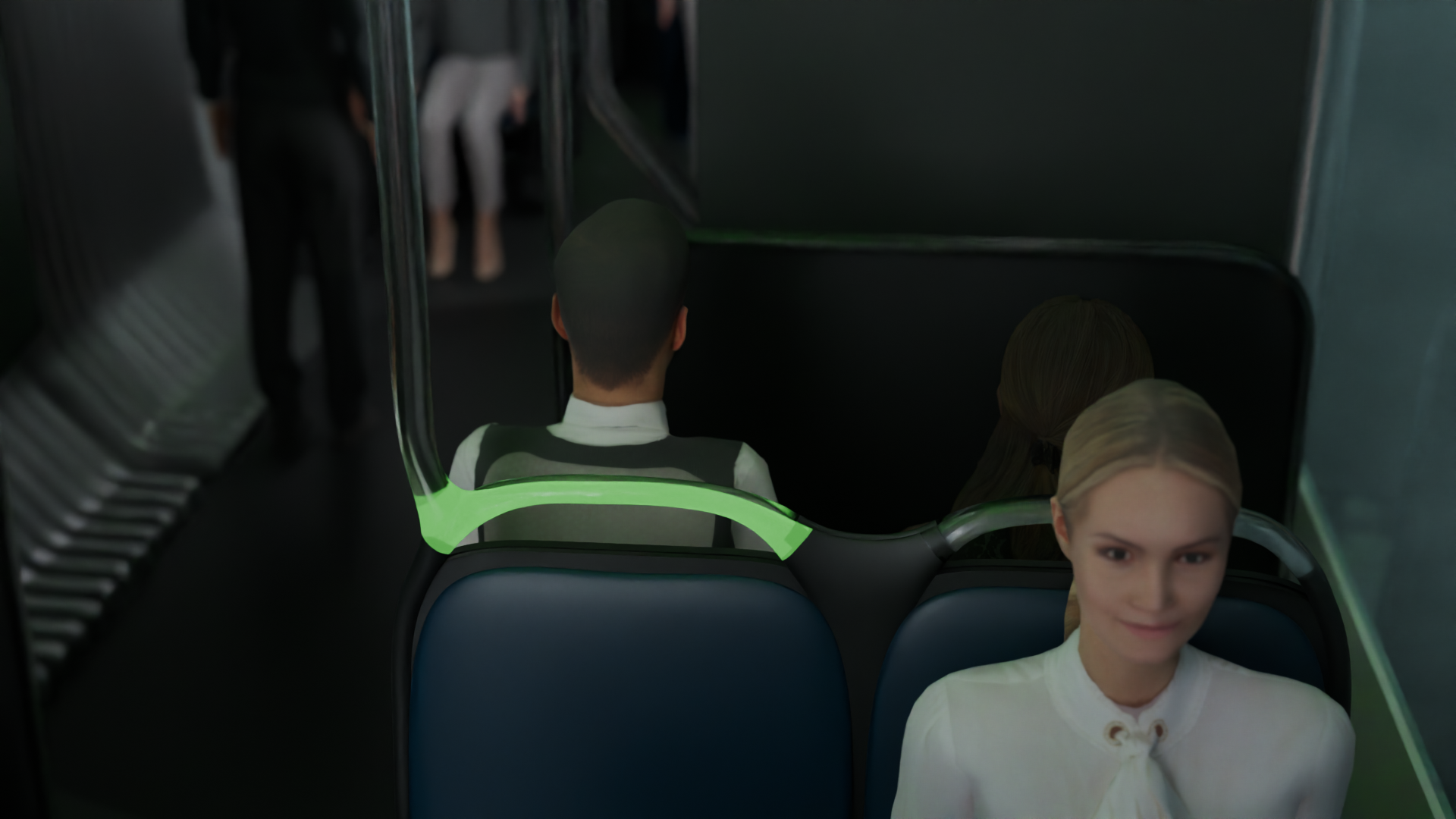
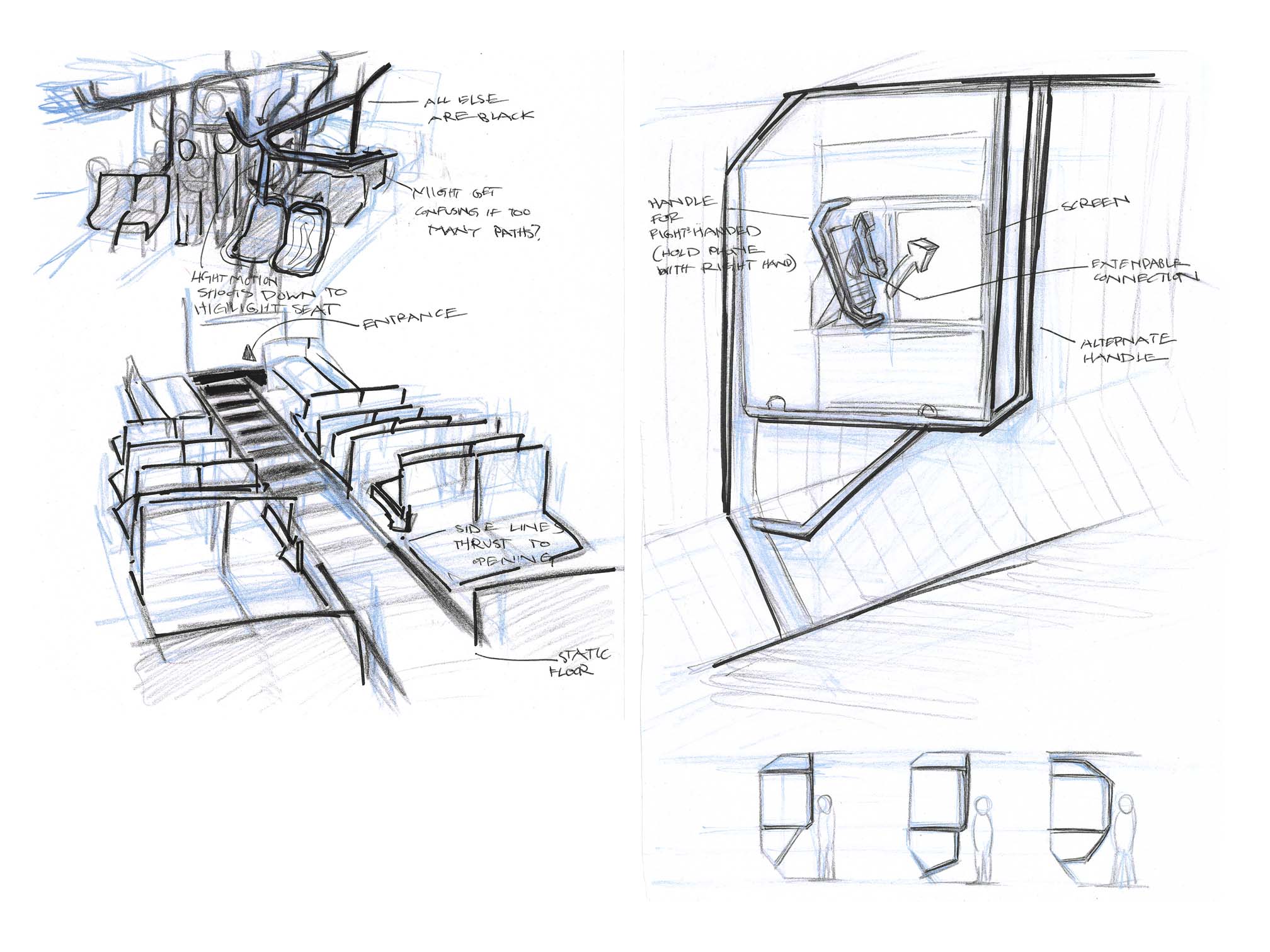
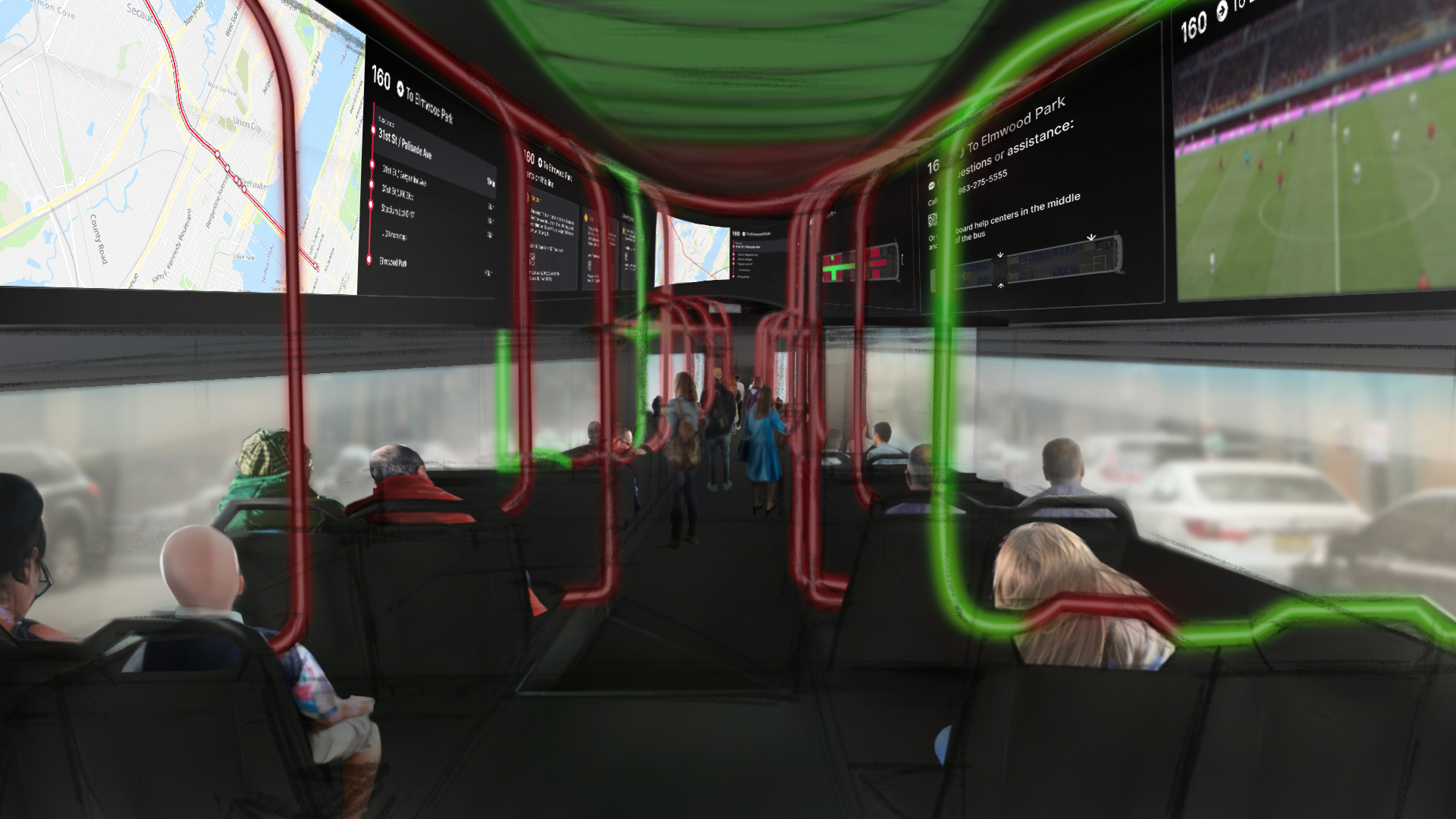
Light configuration highlights open seat

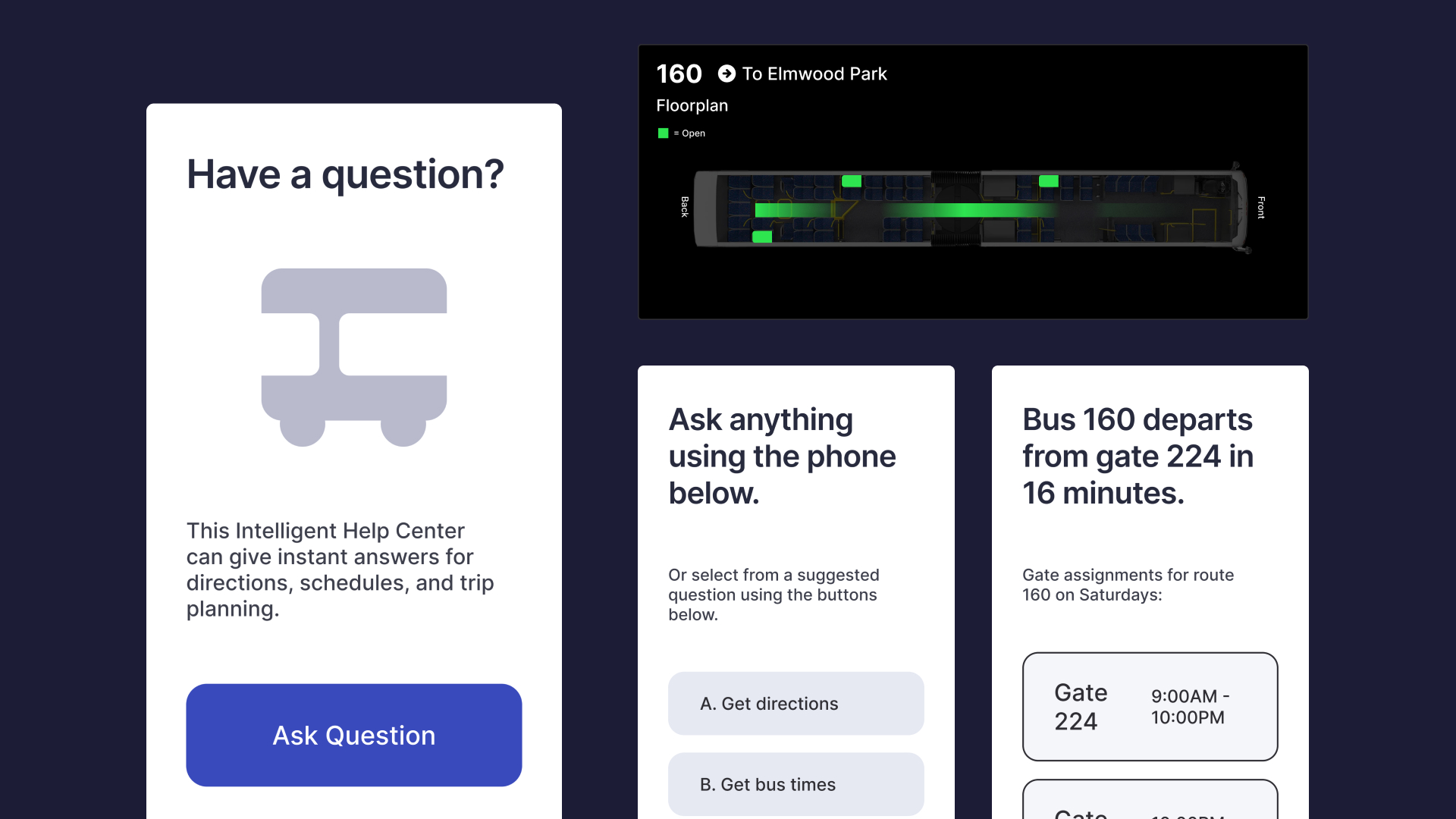
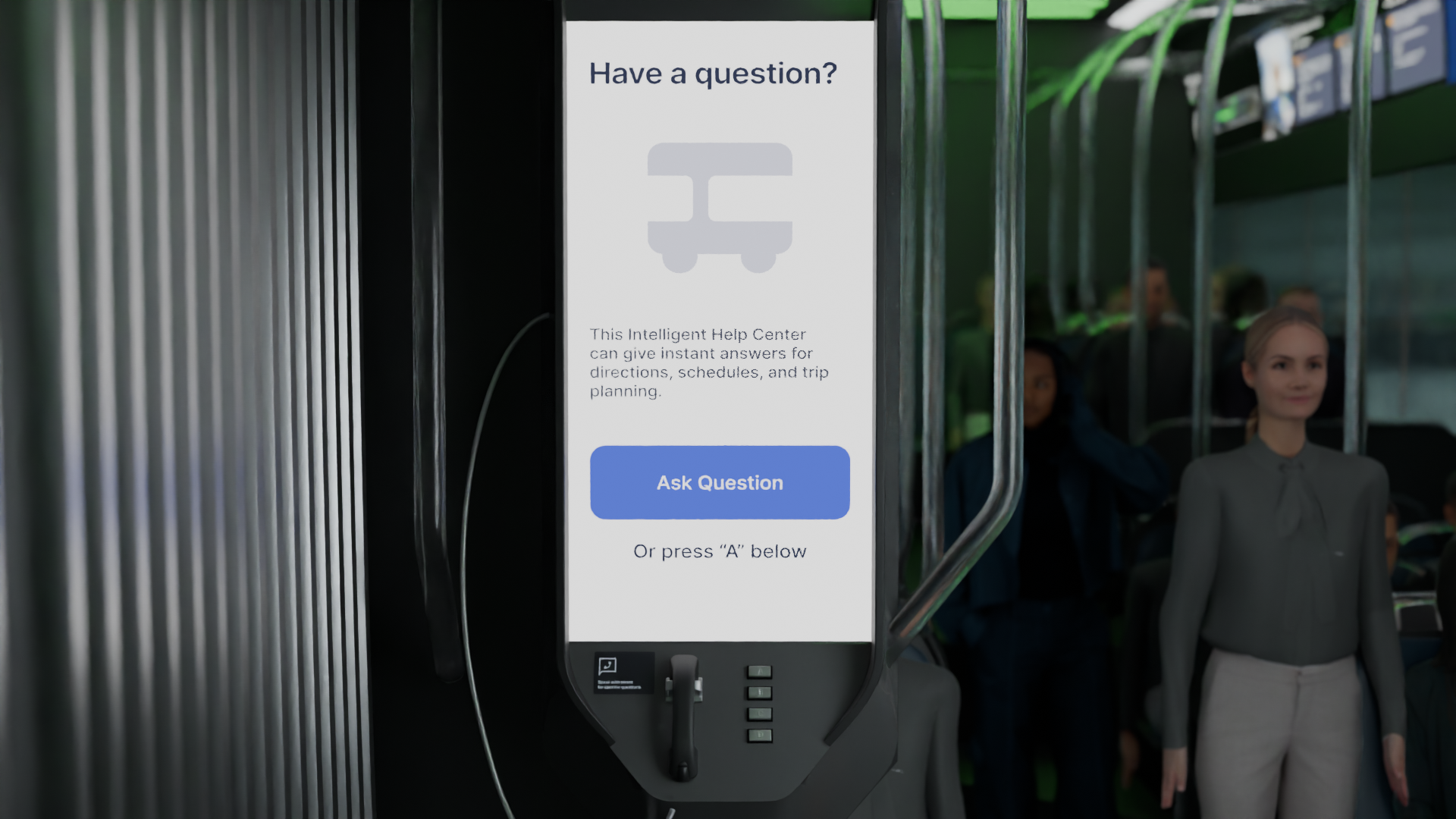
AI information center answers passenger questions
The project innovates a new way to achieve immersive 3D experience using web-based first-person perspective desktop simulation, yielding the spatially considered feedback of a VR experience at none of the cost, a fraction of time taken to develop, and allowing for integration with web interactions, and the participation of a more diverse user demographic.
The testing simulation can be found at nj-bus-simulation2.web.app
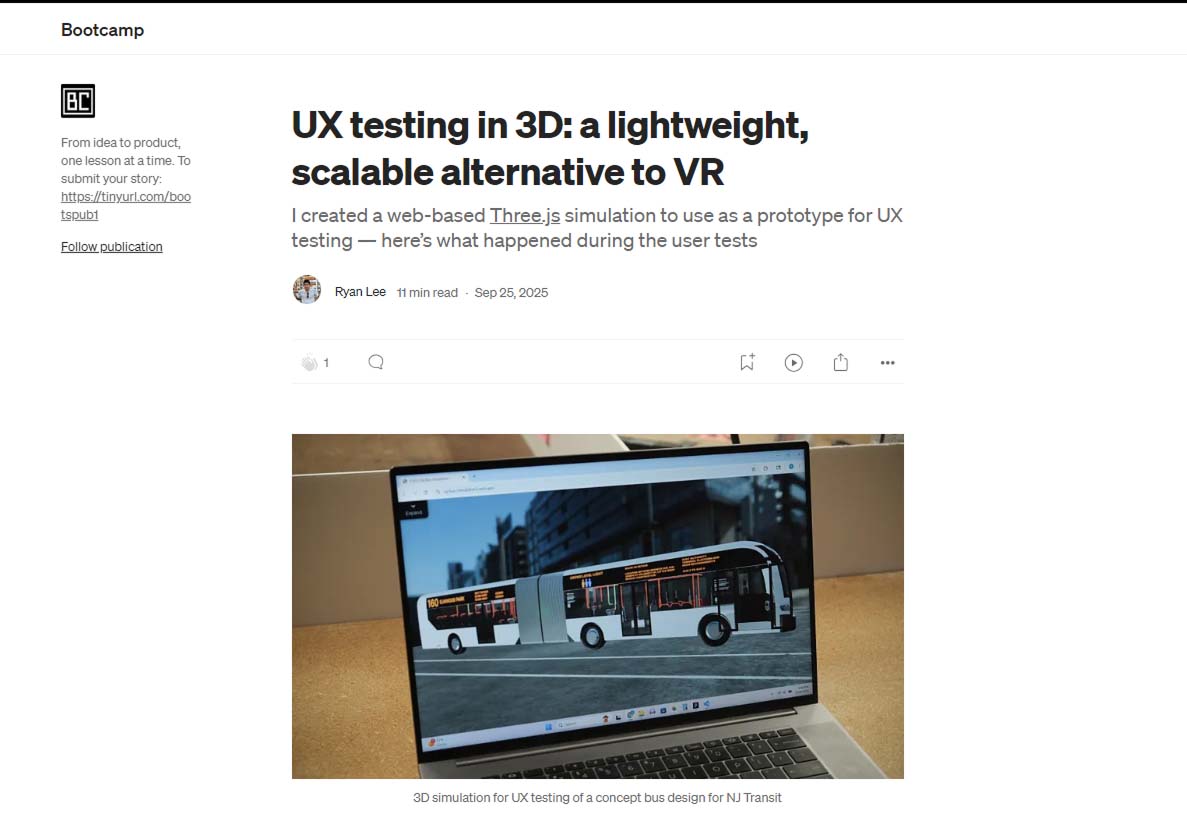
The published article reporting the findings from the research method can be found at medium.com

Published article reporting the findings from using web simulation user testing as a research method. The article can be found at medium.com.
Demo of Three.JS web simulation. The original simulation can be found at nj-bus-simulation2.web.app.
Demo of proposed light states to communicate open space and assist the driver in directing passengers
Problem
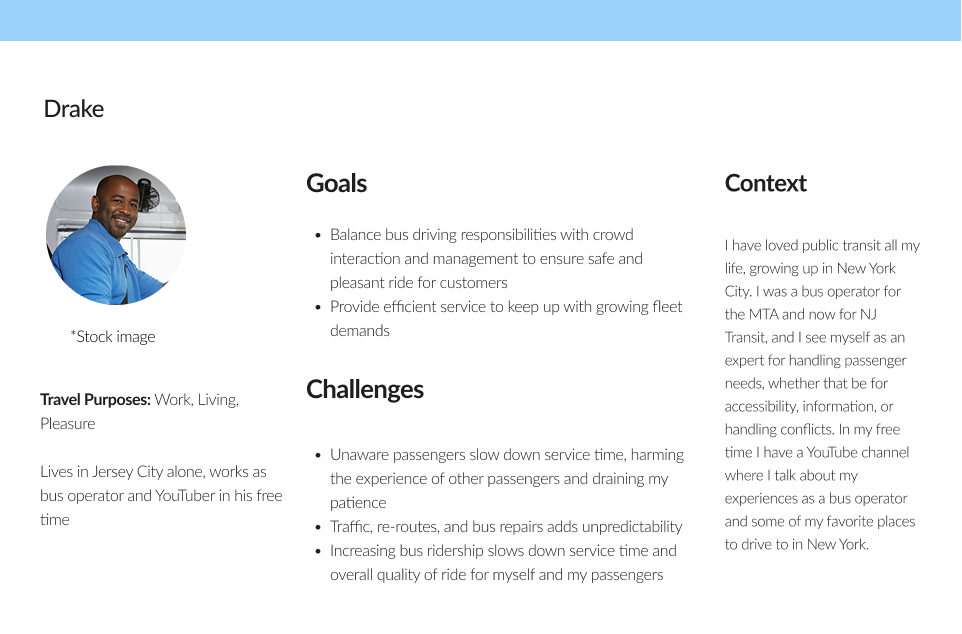
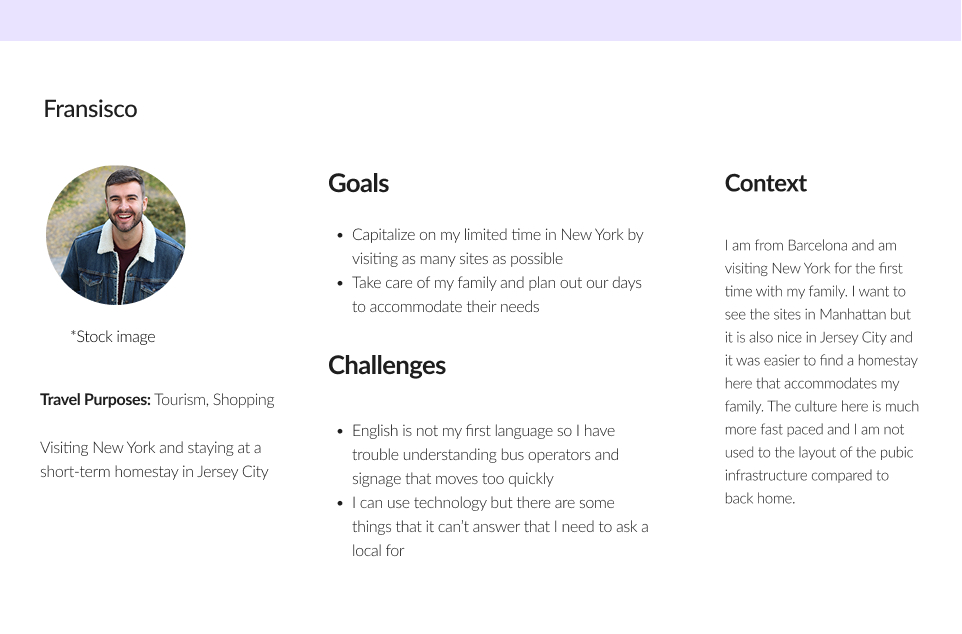
With a growing population and visiting tourists overwhelming NJ’s public transit system, bus operators struggle to balance the demands of managing onboard crowding, providing customer assistance, and driving the vehicle, which adds stress, delays, and confusion to passengers’ trips.
Goal
Create a way to assist drivers with onboard information and management of crowds in NJ Transit buses, providing a more efficient, pleasant, and helpful service for NJ bus passengers.
Impact
Results from final 3D simulation user test:
- 12% increase in overall satisfaction (68% → 80%)
- 15% increase in net promoter score (72% → 87%)
- 82% agree: “The design helped me find the essential information for my trip faster than my current process”
- 72% agree: “The design will help manage crowding and space on the bus”
Initial Discovery Interviews: The Invisible Job of Drivers
8 1-on-1 semi-structured interviews consisting of 5 users (NJ and NYC residents); 3 partners/subject matter experts (bus operators, NJ transit administrators) identified operator performance as a crucial yet often unspoken aspect of the ride experience. As technology moves shared transportation increasingly towards autonomy, the experience must continue to support these social requirements.
Results
- Most prominent challenge areas were: seating, space, route efficiency, rider management, trip planning, efficiency, information & interaction, and comfort.
- Overall satisfaction with current system: 68%
- Net promoter score (how likely to recommend): 72%
“Bus drivers have the toughest job on earth... They have to deal with aggressive customers, bus rerouting… Compared to rail, rail operators don’t have to deal with the interactions as much.” (NJ Transit Administrator)
“NJ Transit is not currently effective at crowd management onboard.” (NJ Transit Administrator)
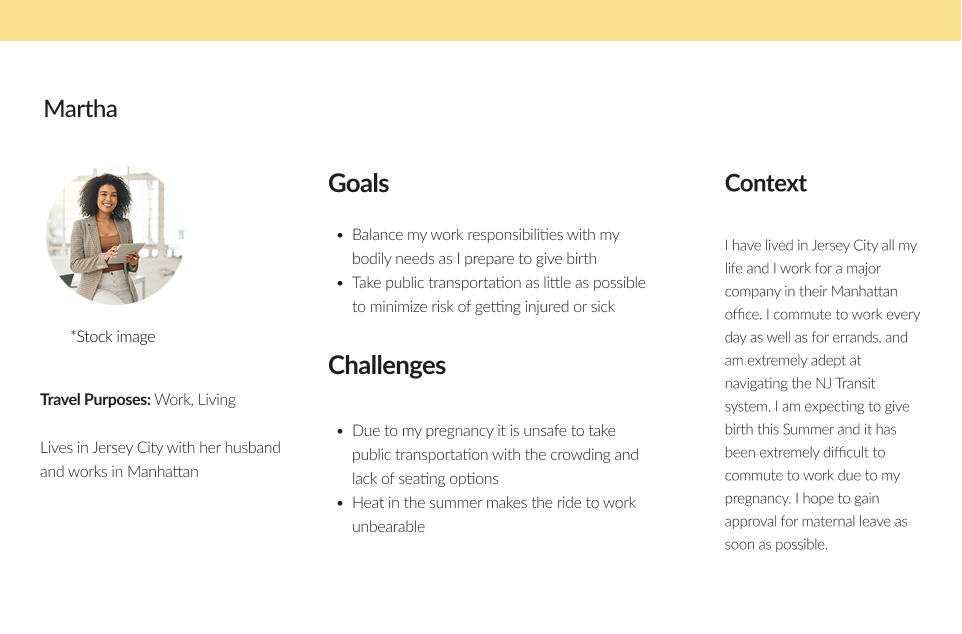
“And since I'm pregnant, when I get on, the bus driver will make sure that I get a seat... But I would say before that they would just cram people in… it's dangerous.” (NJ Resident)
“NJ Transit is not currently effective at crowd management onboard.” (NJ Transit Administrator)
“And since I'm pregnant, when I get on, the bus driver will make sure that I get a seat... But I would say before that they would just cram people in… it's dangerous.” (NJ Resident)


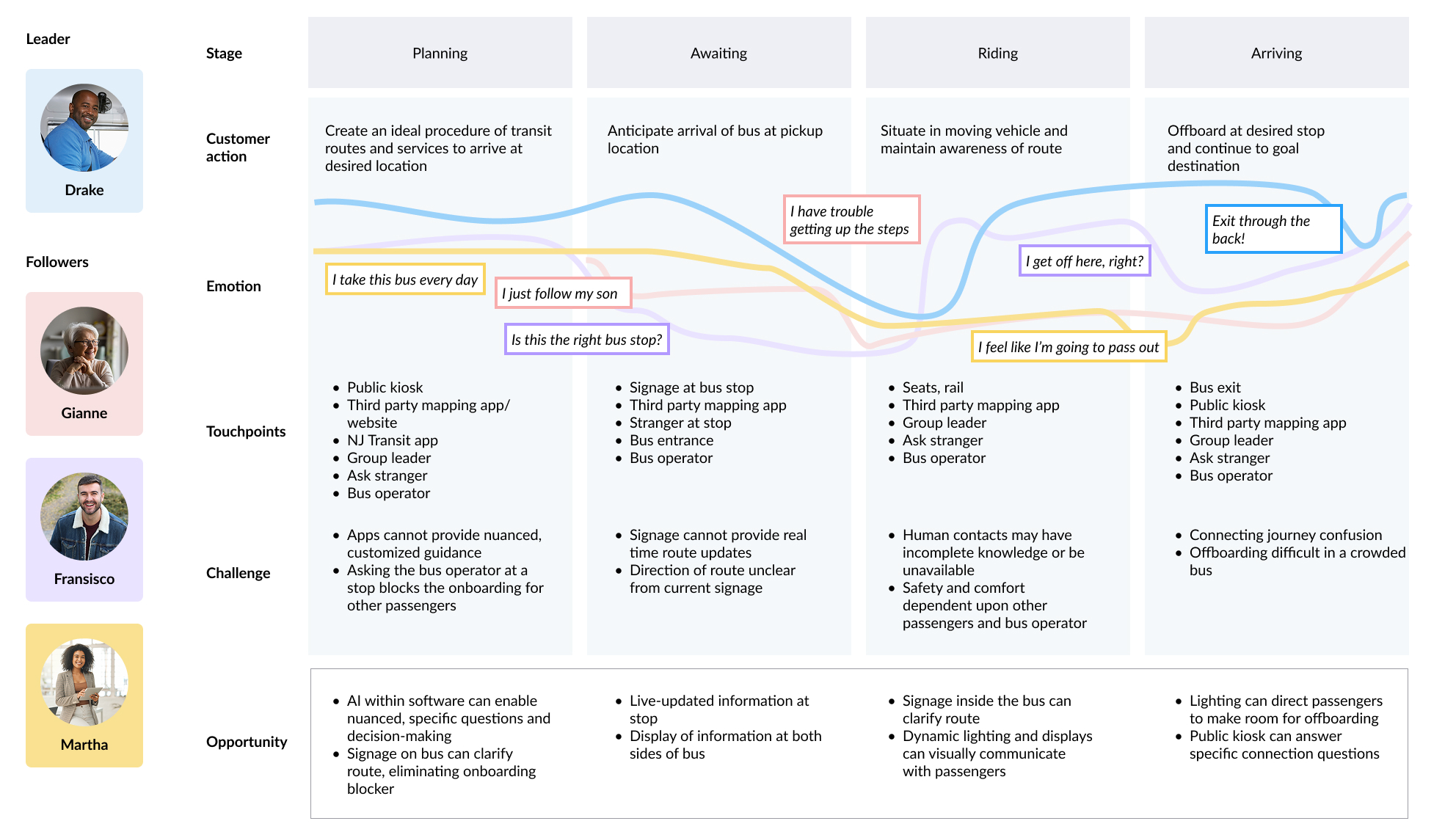
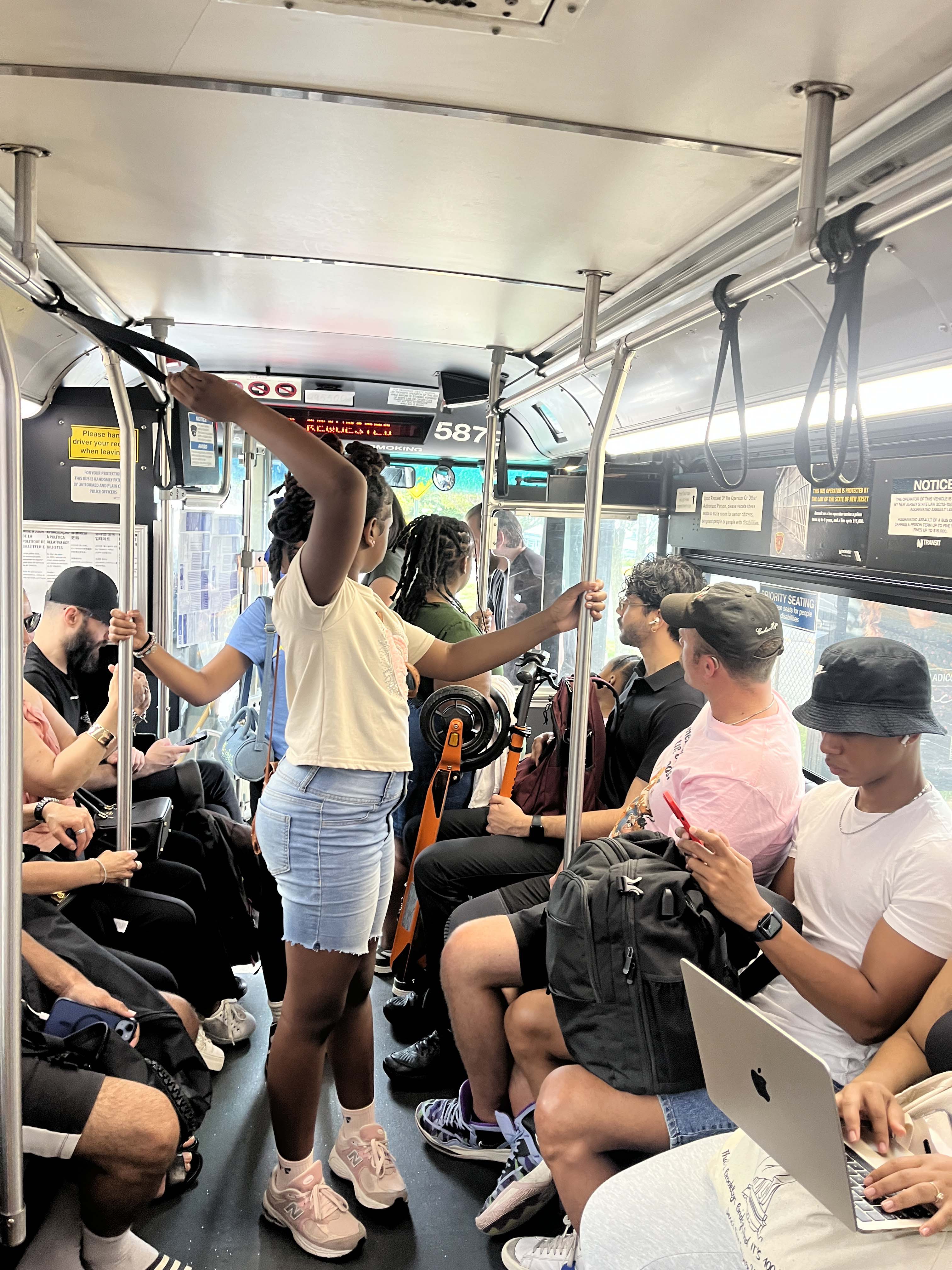
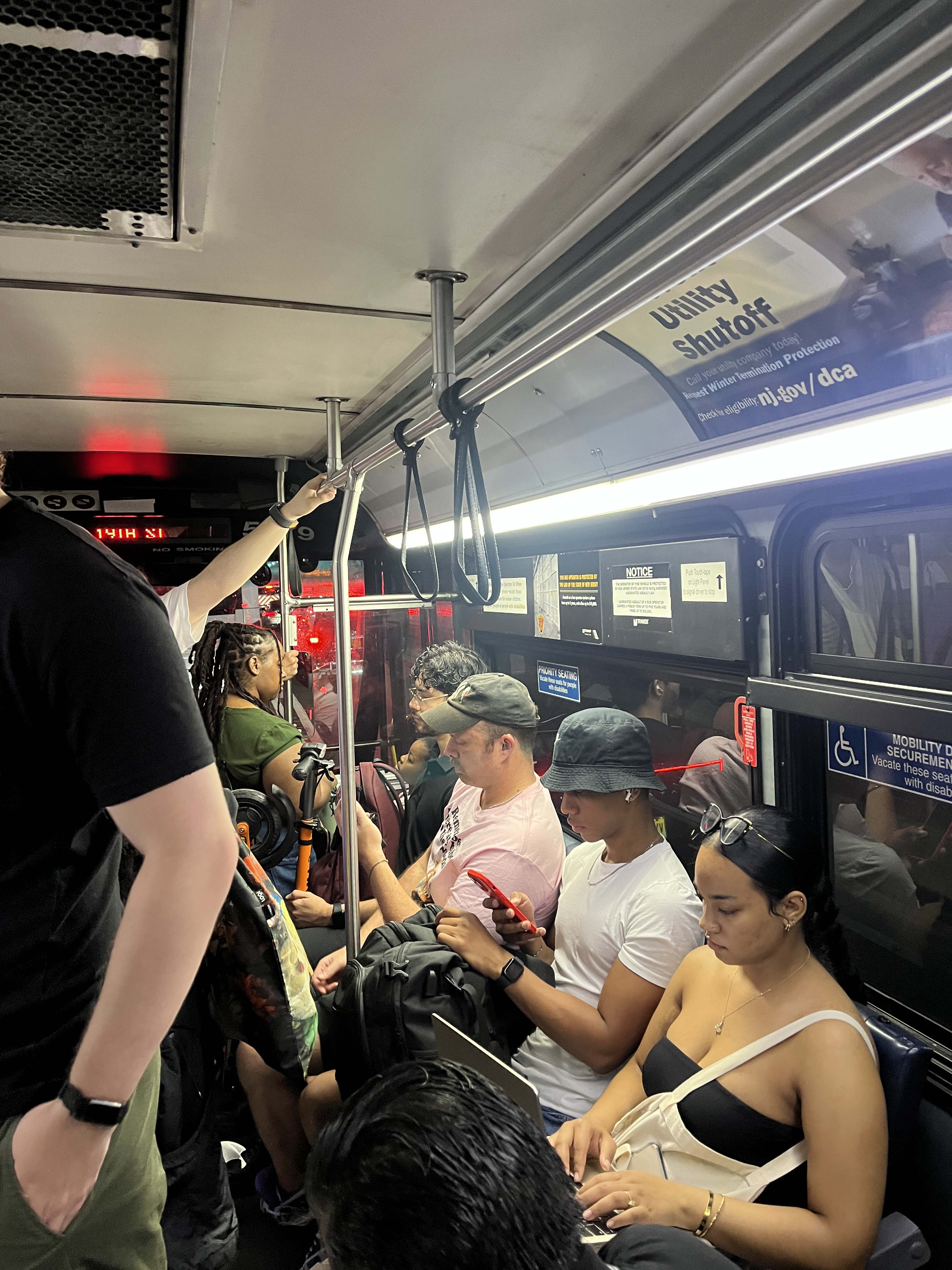
The experience on the 119 bus to New York Port Authority Bust Terminal
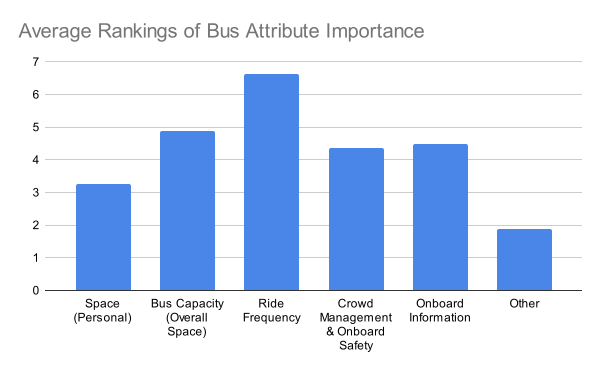
Average importance of selected bus attributes
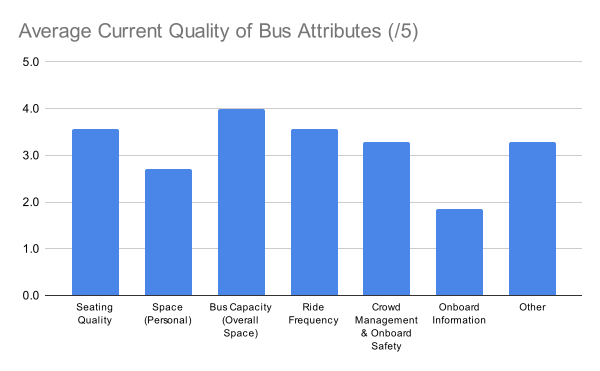
Average current quality selected bus attributes
Note: Unsurprisingly, the research findings from this survey support the independent findings from the June 2025 NJ Transit Customer Advocate Report (Service and Employee Performance)
Concept Development


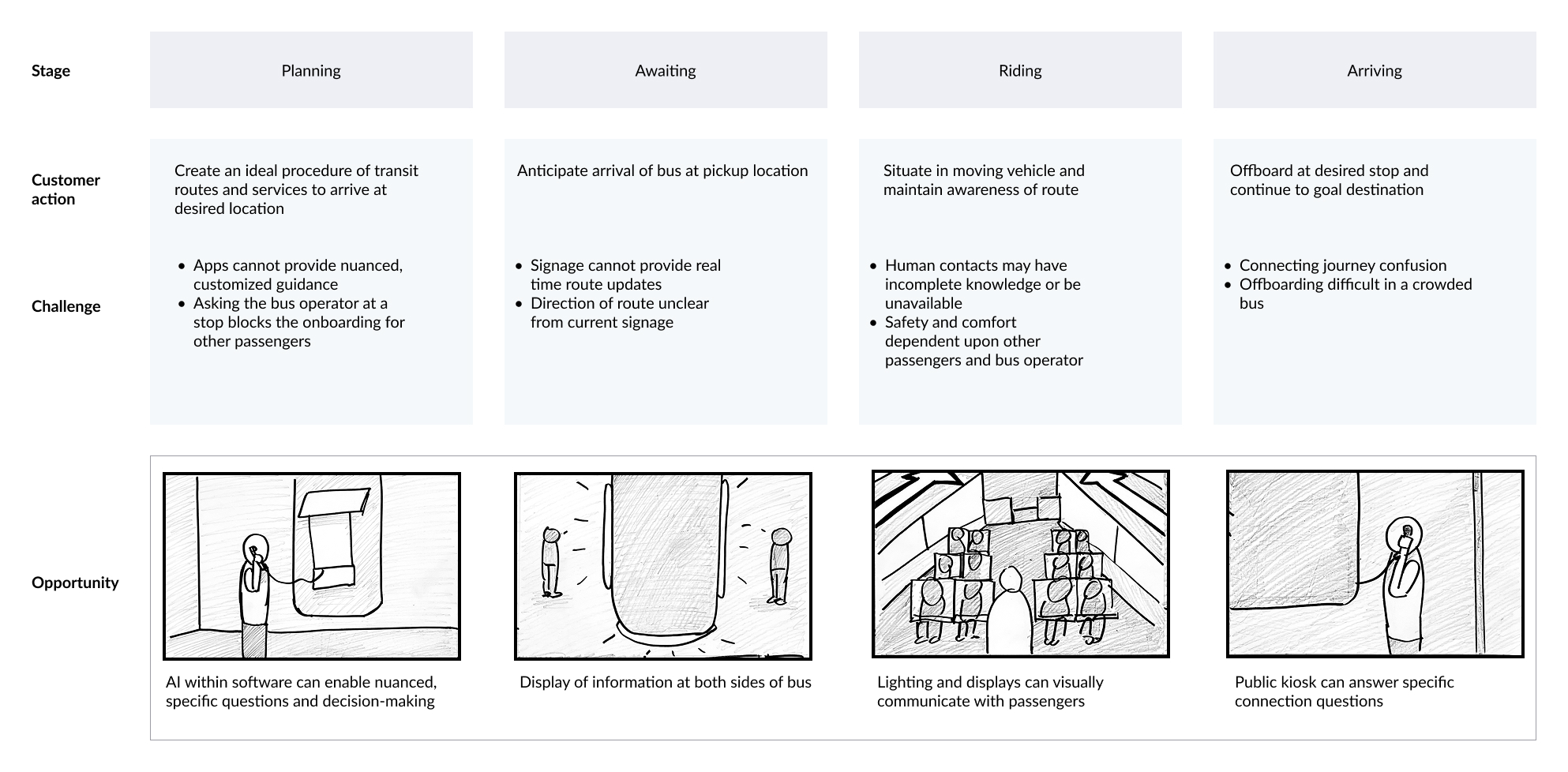
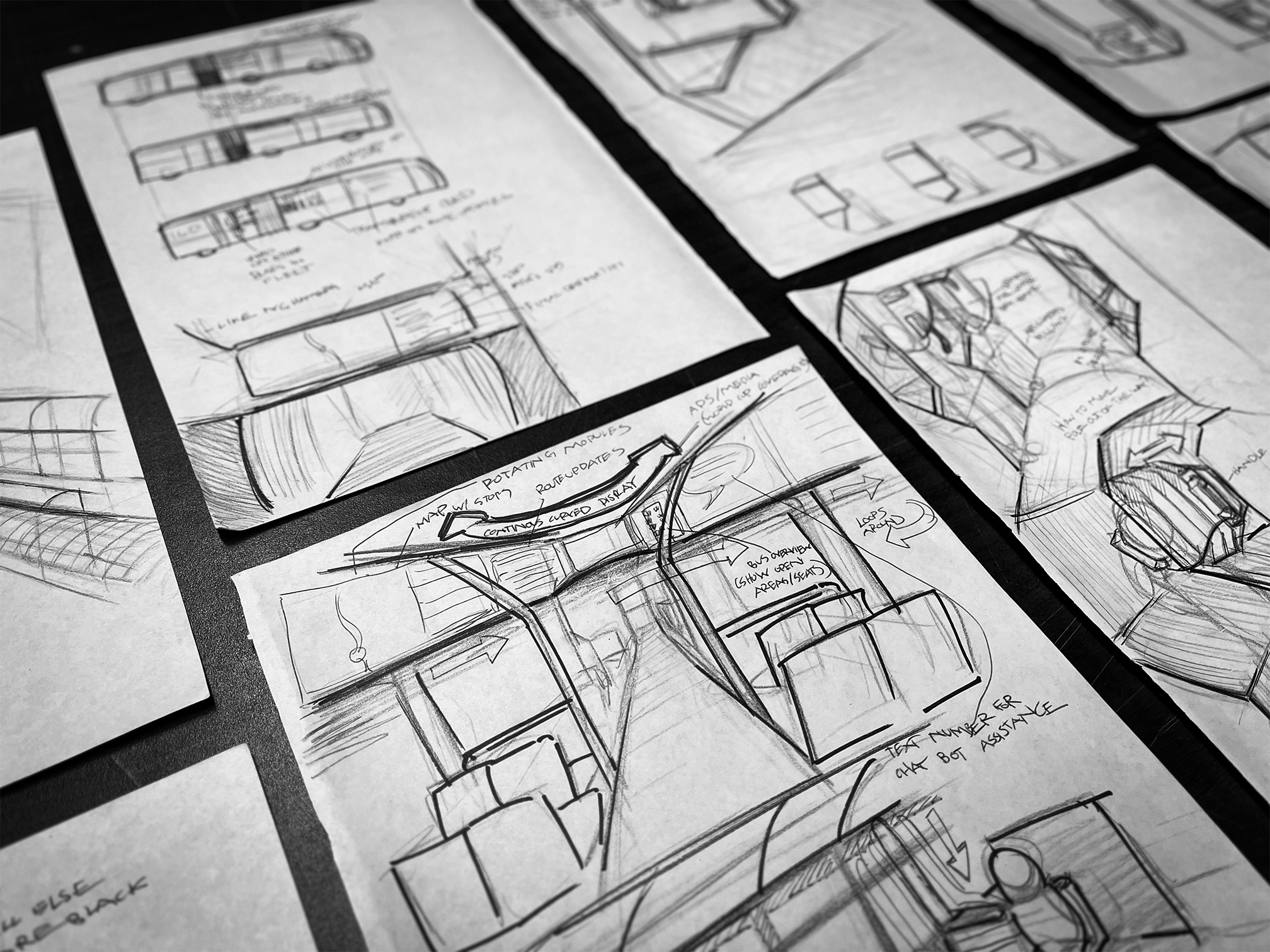
Hand sketches for solution ideas


Photoshop sketches for solution ideas
Feedback from NJ Transit Manager
- “Advertisement in the interior could help generate revenue”.
- Existing seat vacancy indicator technology: LNER Trains, London (railway-technology.com)
User Testing
The project innovates a new way to achieve immersive 3D experience using web-based first-person perspective desktop simulation, yielding the spatially considered feedback of a VR experience at none of the cost, a fraction of time taken to develop, and allowing for integration with web interactions, and the participation of a more diverse user demographic.
The testing simulation can be found at nj-bus-simulation2.web.app
The published article reporting the findings from the research method can be found at medium.com
Methods
10 semi-structured interviews completing tasks via 3D simulation
Participants
8 users (NJ and NYC residents); 2 partners/subject matter experts (bus operators, NJ transit administrators)
Results
- 12% increase in overall satisfaction (68% → 80%)
- 15% increase in net promoter score (72% → 87%)
- 82% agree: “The design helped me find the essential information for my trip faster than my current process”
- 72% agree: “The design will help manage crowding and space on the bus”
Next Steps
- Address color accessibility
- Decrease cognitive load of display

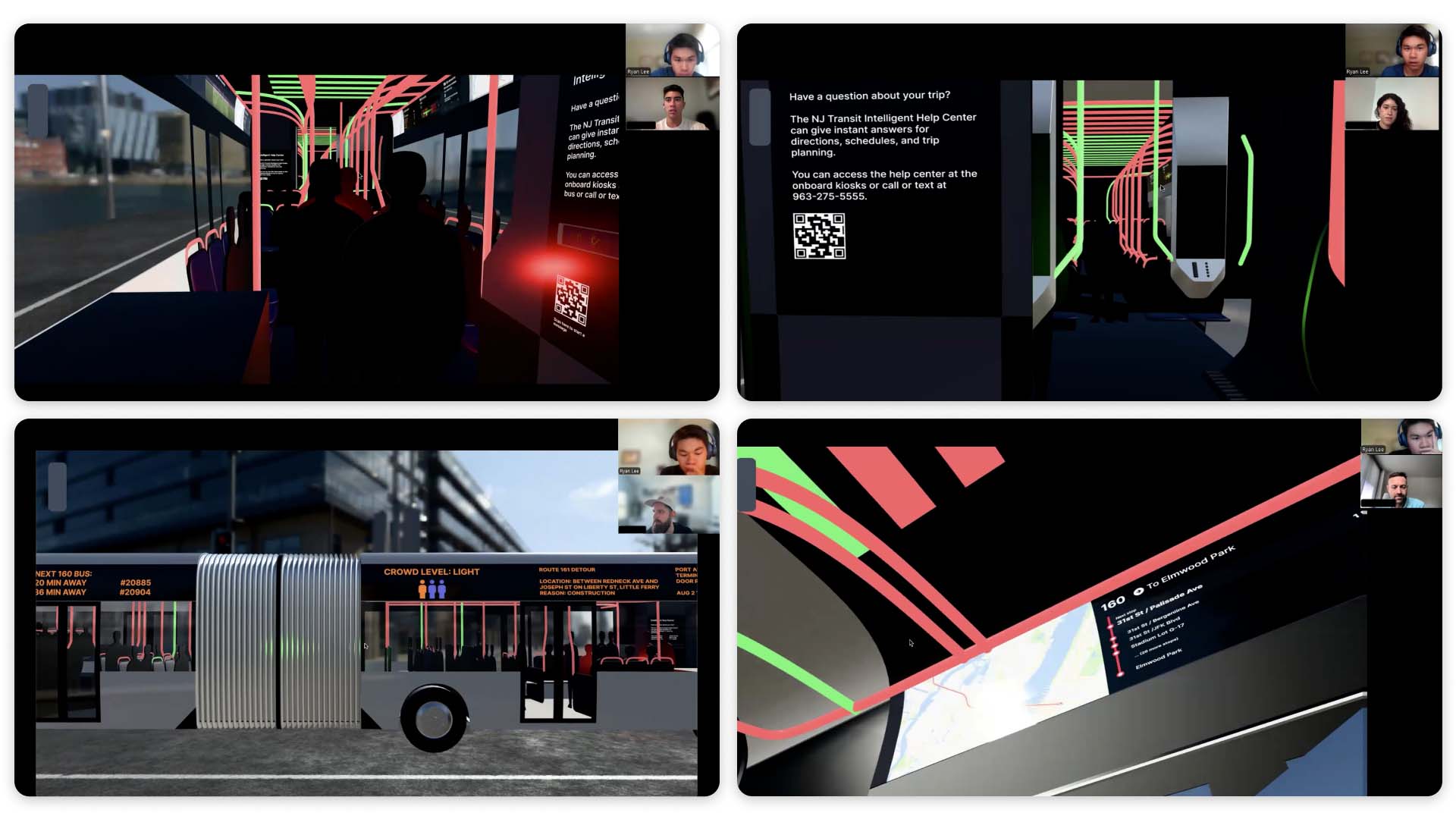
Screenshots from the remote user tests with NJ residents (source: Ryan Lee)

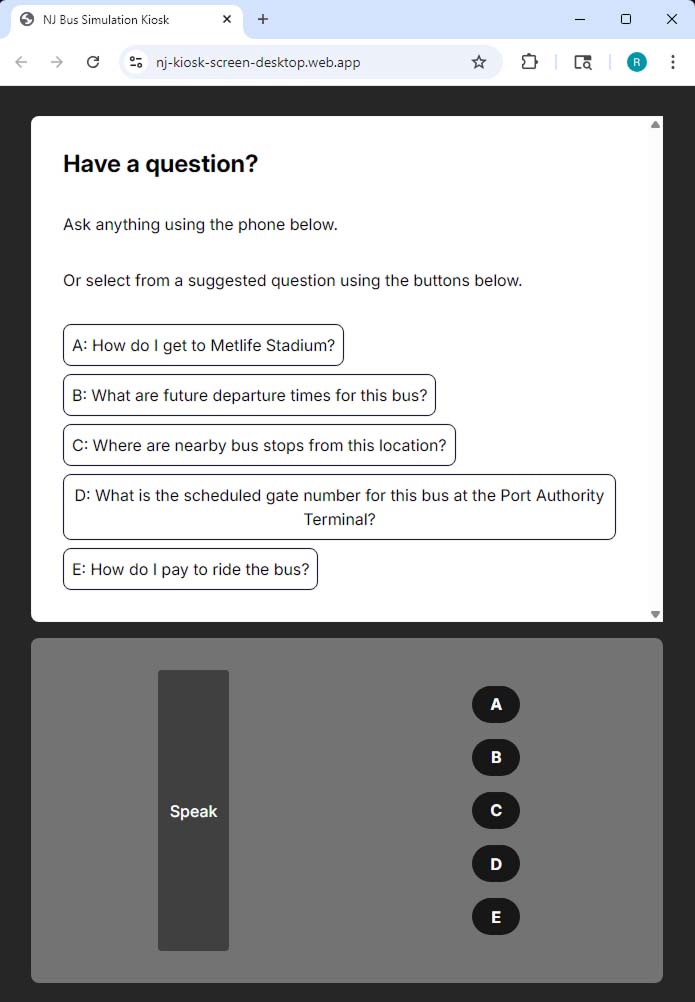
Working natural language-capable information kiosk app embedded into simulation as an iframe
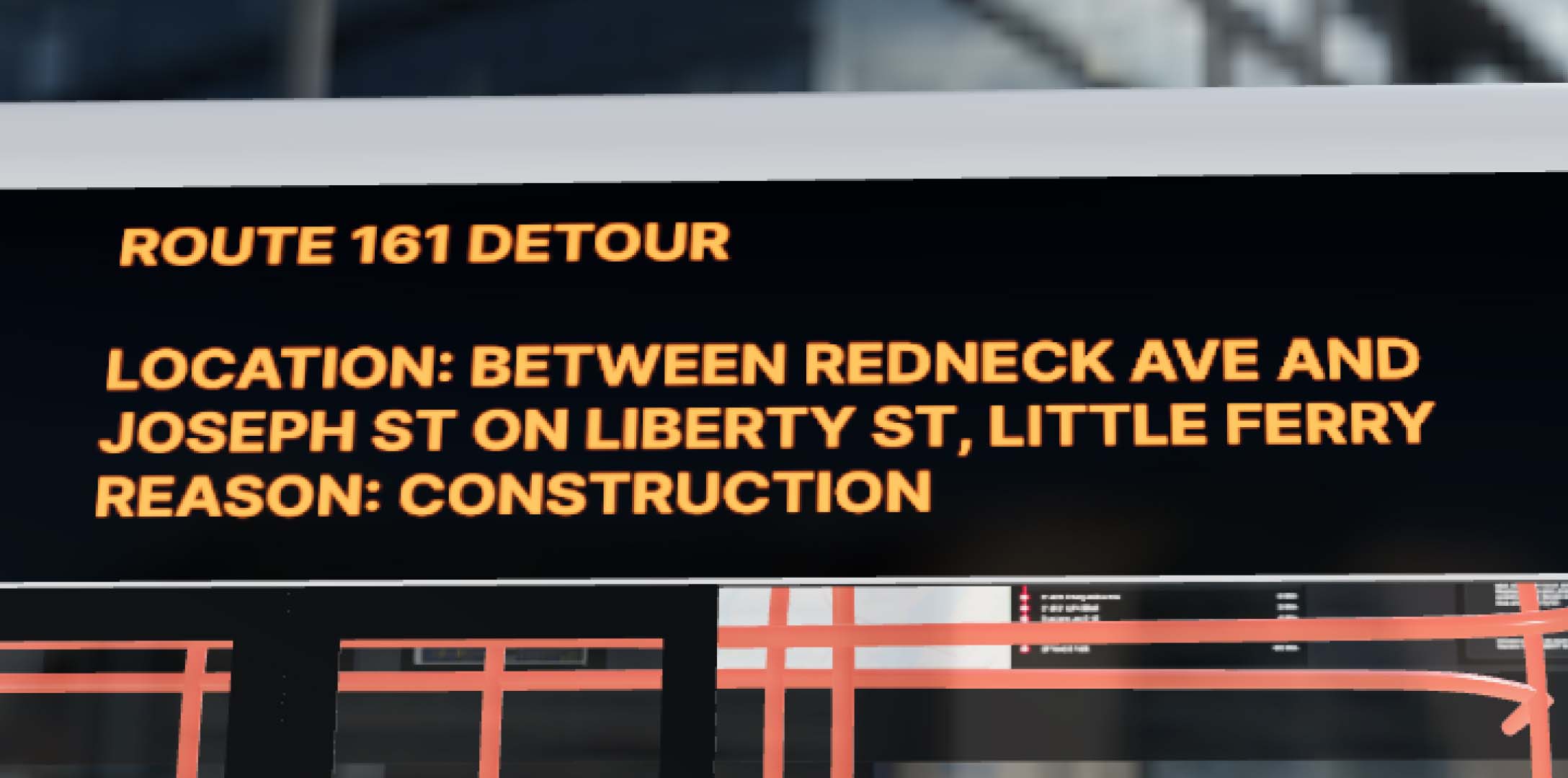
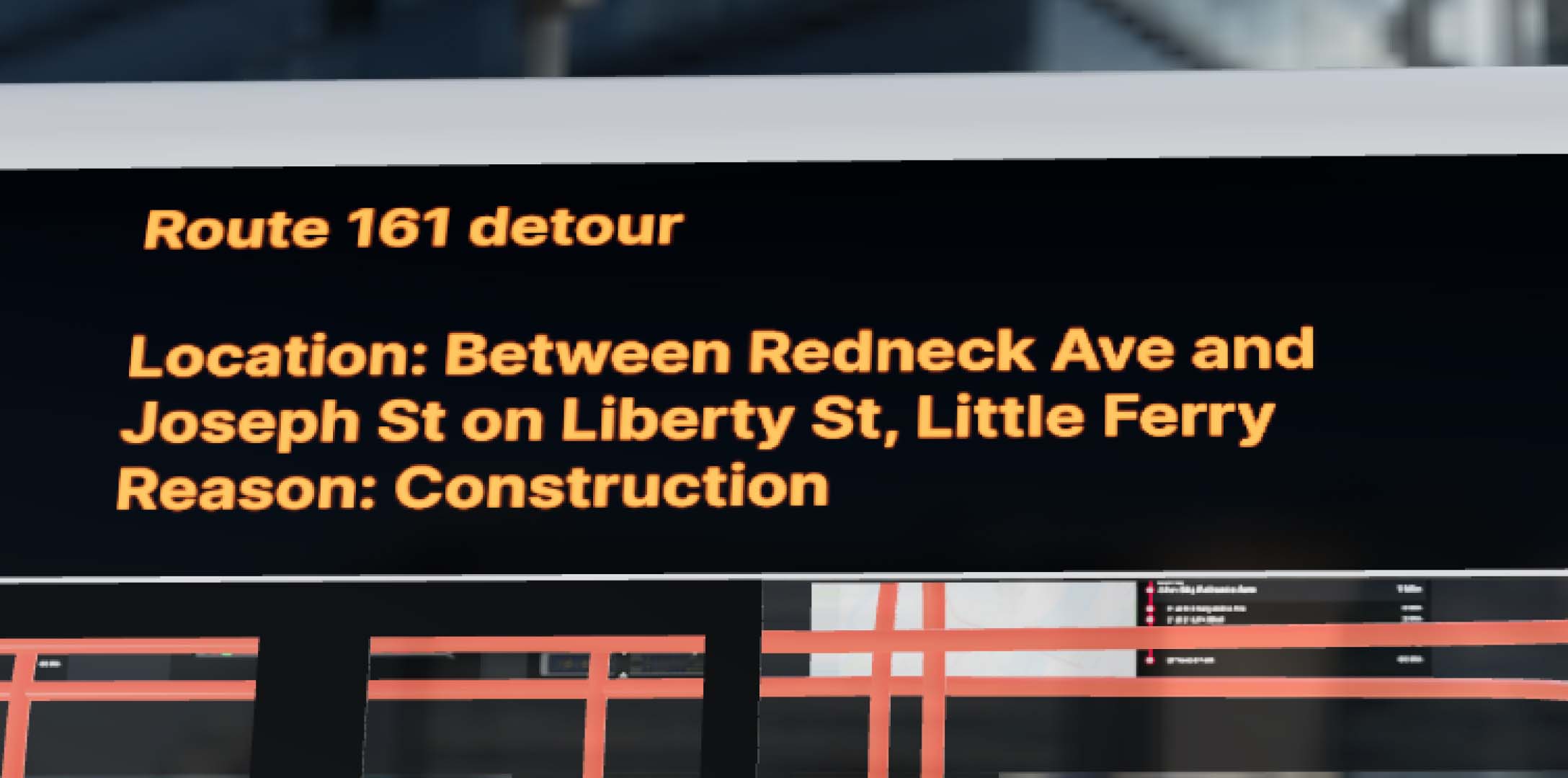
A/B Test: Legibility
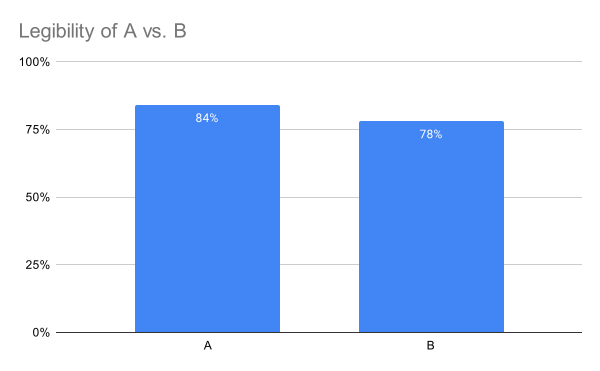
During the test, one task asked to rate the legibility of the exterior text format. 5 participants rated the legibility of option A, all caps (control), the other 5 rated the legibility of option B, sentence case.
Note: 10 participants is not a statistically significant amount of data to draw a confident conclusion from a traditional A/B test. However, the exercise was performed to find out if there were any initial trends in the perception of large text from a long distance away, an insight useful for other public signage.
Surprisingly, the control (all caps) was rated 6% more legible. Despite the results, based on modern design consensus, sentence case was utilized for long text in the final design.
Note: 10 participants is not a statistically significant amount of data to draw a confident conclusion from a traditional A/B test. However, the exercise was performed to find out if there were any initial trends in the perception of large text from a long distance away, an insight useful for other public signage.
Surprisingly, the control (all caps) was rated 6% more legible. Despite the results, based on modern design consensus, sentence case was utilized for long text in the final design.

A: All caps (current standard)

B: Sentence case
AB test results for 10 participants
Final Design

IOOS system overview

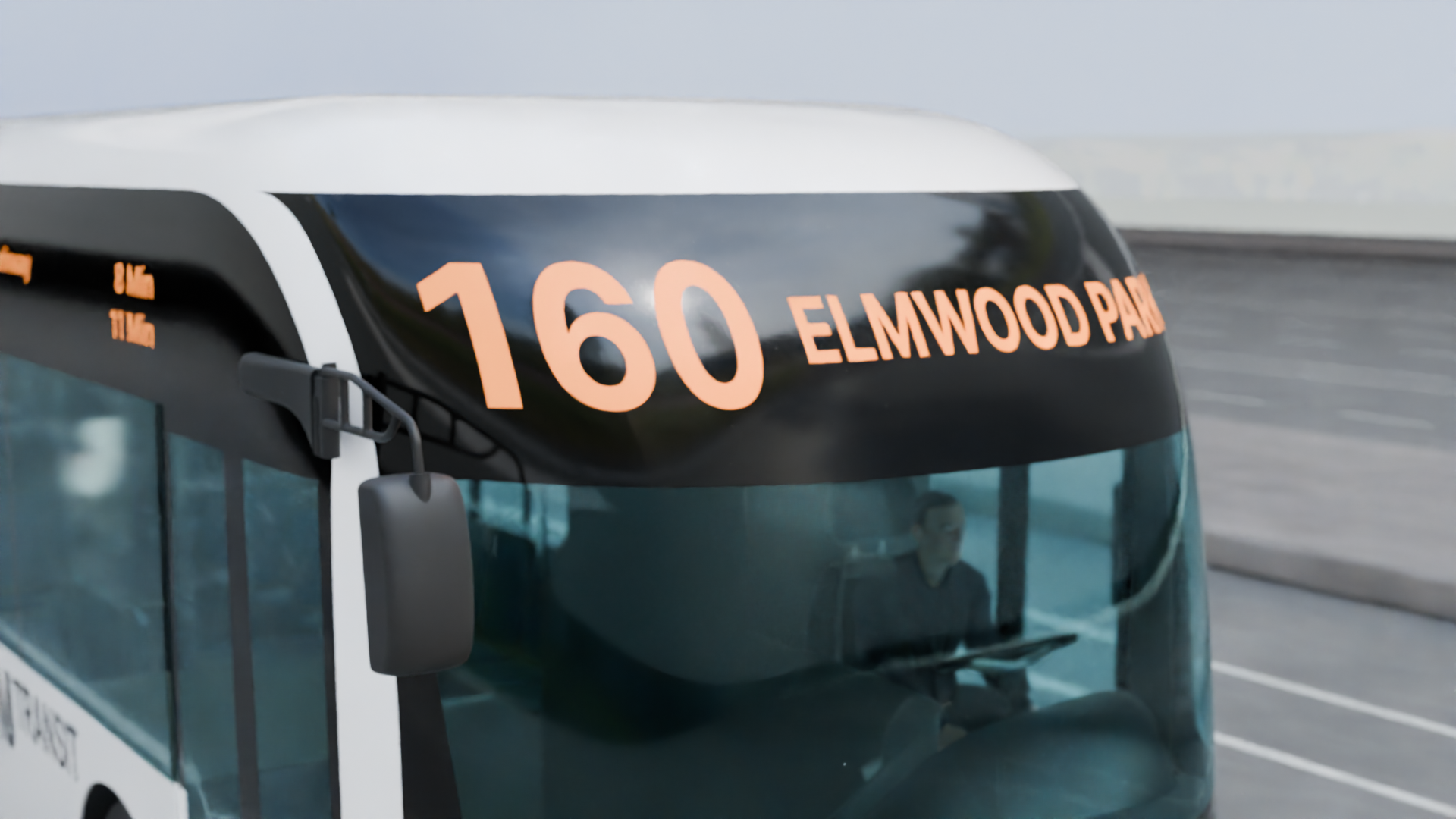
Exterior signage detail - still from "The Championship" short film

Logo & branding detail - still from "The Championship" short film